



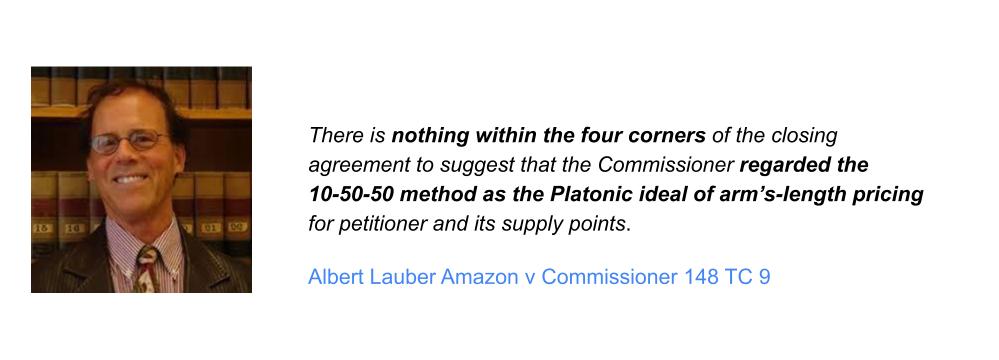






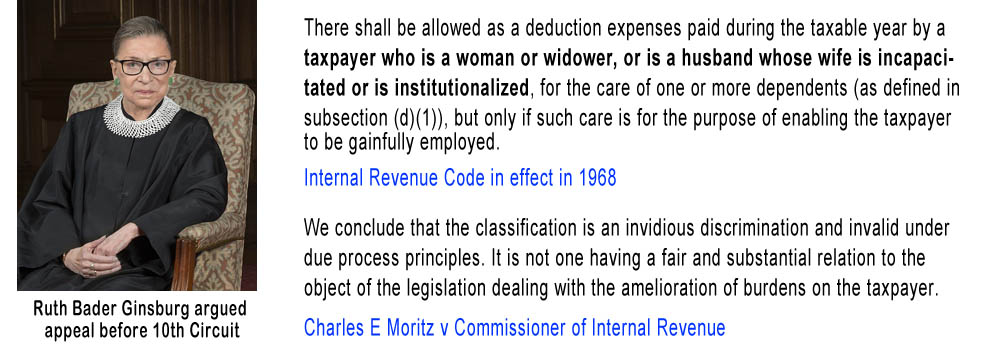




Judge Albert Lauber – Wikimedia

I think North Donald LA Property, LLC (TC Memo 2026-19) may have set a record. It is a syndicated conservation easement case, an instance of what Lew Taishoff calls Dixieland Boondockery or as I put it the industry based on nonsense. As is usual with these cases, the IRS argued that the deduction should be disallowed entirely for a variety of reasons. Judge Albert Lauber “Scholar Al”, according to Mr. Taishoff, ruled in favor of the taxpayer on conservation purpose, on the land not being inventory, and on the appraisal being a qualified appraisal. So North Donald LA Property LLC was entitled to a charitable deduction if the donated easement was worth anything at all.
What Was It Worth?
Judge Lauber found that the easement was worth a substantial sum – $175,824. That was computed on the basis of a 260.48 acre parcel being worth $2,975 per acre before the easement and $2,300 per acre after the easement. The donation was made at the end of 2017 and the property was acquired for $2,975 per acre in Marc 2016, so that seems like a fair deal. The partnership had claimed a somewhat larger charitable contribution, though. To be specific, North Donald claimed a charitable deduction of $115,391,000. So IRS wanted to give them zero, Judge Lauber allowed them, in my mind, a substantial deduction well over $150,000. On a percentage basis, it is not so much – slightly over 0.15%. Just to be clear, that is not 15% of the total claimed. It is 15% of 1% of the total claimed. I am pretty sure that is as low as it has gone without going to zero.
The high before-value claimed was based on the discounted present value of a clay mine. Judge Lauber didn’t agree that clay mining was the highest and best use.
“The property’s zoning classification permitted only agricultural use. Petitioner failed to establish a reasonable probability that the land could be rezoned to permit use for clay mining. Because mining was not a legally permissible use, it was not the property’s HBU. Assuming arguendo that rezoning approval could have been secured, petitioner failed to prove that a clay borrow pit would have been financially feasible, given the high transportation costs to levee construction sites and the high cost of securing wetland “mitigation credits.” We find that the property’s HBU was continued use for agricultural purposes.”
That made the valuation an outrageous overstatement wholly untethered from reality, according to Judge Lauber. Judge Lauber, quoting himself, indicates that the valuation method is wrong as a matter of law.
“As we have recently held, that equation was erroneous as a matter of law. See Ranch Springs, 164 T.C. at 153 (“quat the value of the land with the going concern value of a . . . mining business conducted on the land . . . defies economic logic and common sense.”); J L Mins., T.C. Memo. 2024-93, at *63 (noting that the owner-operator version of the DCF method “ not valu the property at all, but what a speculative business could do with the property”). A knowledgeable willing buyer would not pay, for one of the assets needed to conduct a mining business, the entire projected value of the business.”
The Ranch Springs decision is quite significant as it is a regular Tax Court opinion rather than a memorandum opinion. The appellant’s brief recently filed on it in the 11th Circuit. Jones Day attorney Charles Hodges argues that Judge Lauber’s holding on the relationship of land value and going concern value could have profound effects across multiple sections of the Internal Revenue Code. He wrote:
“Oral argument is warranted because this appeal presents recurring fair market value(“FMV”) questions with consequences far beyond conservation easements. The Tax Court issued a reviewed, precedential opinion in Ranch Springs (164 T.C. No. 6) (“Ranch Springs“, “Reviewed Opinion”, or “Op.”) that reorients FMV doctrine for undeveloped property by categorically disfavoring income methods and elevating raw-land sales, despite the governing willing-buyer/willing-seller and highest-and-best-use (“HBU”) framework. This holding will be cited across the Code and should be addressed by this Court now.”
I am really excited about how Lauber’s bold “matter of law” statement is going to play out.
Other Items Of Interest
North Donald had included $1,157,469 of other deductions on the return. Judge Lauber found that a $1,055,000 “consulting fee” paid to the promoter to market the deal to investors and $50,000 to a law firm that served as “material advisor” were nondeductible syndication costs and that the balance of the “other deductions” ($52,469 by my reckoning) must also be disallowed.
The North Donald opinion gave a detailed account of the marketing of the tax shelter. We get a sense of the fungible nature of units in CSE deals.
“Dozens of other SCE deals were closing at year-end 2017. Hoping to enable the North Donald deal to achieve its targeted capital raise of $20.3 million, EvrSource switched investors into that deal from other transactions. In December 2017 EvrSource was also selling a deal called Crestlawn, involving property whose pre-easement HBU was allegedly as a cemetery. When the Crestlawn deal became “fully subscribed,” EvrSource on December 17 moved seven Crestlawn investors into the North Donald deal, telling them that “the ratio is better at 4.7.” When a deal called Kelso failed to make its minimum capital raise, EvrSource switched dozens of Kelso investors into the North Donald deal, explaining that its 4.7:1 ratio was “slightly better” than Kelso’s.”
Even with all the switching, the deal did not sell out, which would have made for a large unused charitable deduction. A solution was found.
“Welsh Land was a “friends and family” deal offered exclusively to Sixty West insiders. They were promised charitable contribution tax deductions of $15.00 for every $1.00 invested. Welsh Land raised $1.9 million from these individuals and used $1.43 million of that sum to purchase a 36% interest in North Donald. The remaining 6% of North Donald continued to be held by Sixty West and an affiliate.”
So there you go. A 4.7 multiple for the unwashed masses and 15 for the family and friends.
The other thing was an insurance option.
“In response to the “call to vote,” the investors also voted in favor of the “insurance option.” North Donald accordingly purchased an “Investor 170(h) Liability Insurance” policy underwritten by a syndicate at Lloyd’s of London. In exchange for a premium of $653,333, the policy would reimburse investors for up to $14 million of lost “tax savings” attributable to disallowance of the deduction claimed for donation of the easement. For the policy to pay out, the disallowance would have to be attributable to a “wrongful act” carried out by a third party, such as an appraiser or other person involved in the “due diligence” for the transaction. The funds to purchase the insurance policy were derived from the capital raised in the investor offering.”
$14 million won’t go very far on this disallowance, but it is something. What is intriguing is how the proceeds will divide between the 4.7 multiple people and the 15 multiple people. Will it be in proportion to tax deficiency or contributions?
On penalties IRS had gone for the 75% fraud penalty, but Judge Lauber ruled against them since the partnership did not in any way hide what it was doing. The 40% valuation penalty and 20% accuracy penalty where the former is not applicable were upheld.
Other Coverage
Lew Taishoff weighed in, of course, with “I Apologize For Such A Long Letter“.
Ed Zollars of Current Federal Tax Developments had Analysis of North Donald LA Property, LLC v. Commissioner: Valuation and Penalty Defenses in Syndicated Conservation Easements
“For tax professionals representing partnerships or investors in syndicated conservation easements (SCEs), the United States Tax Court’s recent memorandum decision in North Donald LA Property, LLC v. Commissioner, T.C. Memo. 2026-19, provides essential guidance. The case touches upon the rigorous requirements for qualified appraisals, the critical determination of a property’s highest and best use (HBU) for valuation, the deductibility of syndication costs, and the nuanced application of civil fraud and gross valuation misstatement penalties. This article outlines the factual background, the taxpayer’s positions, the Court’s technical analysis of the applicable Internal Revenue Code (I.R.C.) provisions, and the final conclusions
Jack Townsend has a really good analysis in Federal Tax Procedure – Tax Court (Lauber) Rejects Bullshit Syndicated Conservation Easement (BSSCE) Valuation Claim – He noted something that went over my head namely that the taxpayer did not even try to argue the original valuation in the Tax Court.
“So, after trial, North Donald conceded $54,156,000 of the amount it claimed on the return. More importantly, after trial, North Donald still claimed a value of $61,235,000. Judge Lauber found that the actual value was $175,824, which is 0.29% of the value North Donald claimed at trial.”
He also had an interesting comment on the fraud penalty.
“So, I guess the take away is that, at least in the BSSCE context, taxpayers can avoid the fraud consequence of fraudulent gross overvaluation by disclosing key elements of the fraud that should, if the IRS has the resources, result in an audit. Disclosure functions as a sort of get-out-of penalty free card even though they knew the parties intended to grossly overvalue the donation. I am not sure that is a good message to send to taxpayers.”

For great value in continuing professional education check out the Boston Tax Institute.
If you would like to do business with Your Tax Matters Partner email yourtaxmatterspartner@gmail.com.
For purposes of the federal income tax deduction available for an asset conveyed to charity, the definition of “fair market value” has been the same since at least 1964. See, i.e., Rev. rul. 64-205;1964-2 C.B. 62. The ruling stated that for these purposes fair market value is “the price at which the property would change hands between a willing buyer and a willing seller. . . .” Or, as I like to say to potential easement donors, “If you did not own this property, knowing what you know about the property and the market, what would you pay for this property??” Judge Lauber and other Tax Court judges know this and understand, and, one way or another, they have continued to repeat the correct rule in recent cases.
For federal income tax charitable deduction purposes, the definition of “fair market value” has remained the same for slightly more than 60 years now. But in the face of that, counsel for the syndicators and promoters of abusive syndicated conservation easement transactions (“SCETs”) have done intensive work, before the IRS and the Tax Court and certain Courts of Appeal, to try and convince those parties that conservation easements are so special and unique a new and different definition of “fair market value” must be applied to be able to calculate the fair market value of donated conservation easements.
The attorneys are just doing their jobs, which is to protect their clients. They have been making up all sorts of new definitions of “fair market value.” They are trying very hard to come up with clever “new approaches” to “fair market value” and trying to sell those to the IRS and the courts.
The result has been a stupefying spread of misinformation about what is “fair market value”. The new definitions and approaches are and pure fiction. But these efforts and claims have spread like wildfire and the conservation easement field has suffered because so many landowners and so many of their attorneys and so many appraisers have heard the misinformation over and over and over again.
Thanks again to Judge Lauber and others. I do hope the courts continue to see this smokescreen clearly and continue to hammer bogus arguments and grossly bogus claimed deductions in abusive SCETS.