

















































































Image by Grok
Back in the day, I could crank out posts quickly. Now I find the files I open a lot more files than I close. There were some interesting things in March that I would have loved to dive deeper into, but I am not going to kid myself. The least I can do is to point them out and tell you why I think they are interesting.
Paul Daugerdas
Around the turn of the millennium major law firms and accounting firms engineered a raid on the Treasury from tax shelters that “worked” by essentially repealing the laws of double entry. Paul Daugerdas was a major player. He ended up suffering the worst consequences – a 15-year sentence and $371 million in restitution. I last wrote about him when he was seeking compassionate release due to COVID. I quoted from the opinion on that
“Daugerdas’s criminal conduct was in a class of its own, and the conspiracy ensnared hundreds of individuals. While his applicable Guidelines range was life in prison based on the offense level, the statutory maximum for his crimes was 696 months of imprisonment. This Court sentenced Daugerdas principally to 180 months of imprisonment and imposed restitution of $371 million. To date, Daugerdas has served 37% of his custodial sentence. And he has not voluntarily paid a cent of restitution. Granting Daugerdas’s motion would do little to “promote respect for the law” or “provide just punishment for the offense.””
According to Jack Townsend, Daugerdas ended up serving nine years due to a commutation granted by President Biden in 2024.
He was in the Seventh Circuit appealing a 2024 Tax Court opinion concerning the restitution. It was an appeal of a collection due process hearing. Judge Goeke sustained the filing of a Notice of Federal Tax Lien, did not sustain a levy and determined that Daugerdas was not entitled to an installment agreement.
Daugerdas’s sentence called for the restitution to be paid after release in installments limited to 10% of gross monthly income. The IRS commenced administrative procedures and assessed the full amount of the restitution making it immediately due and payable. The Seventh Circuit agrees with Tax Court that the IRS can do that.
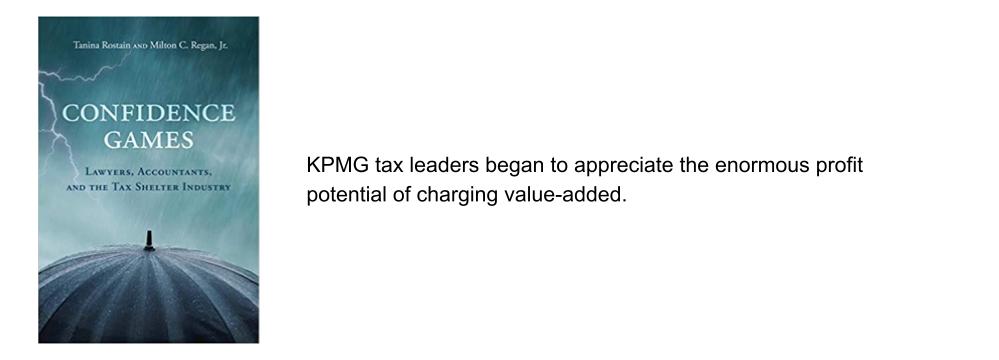
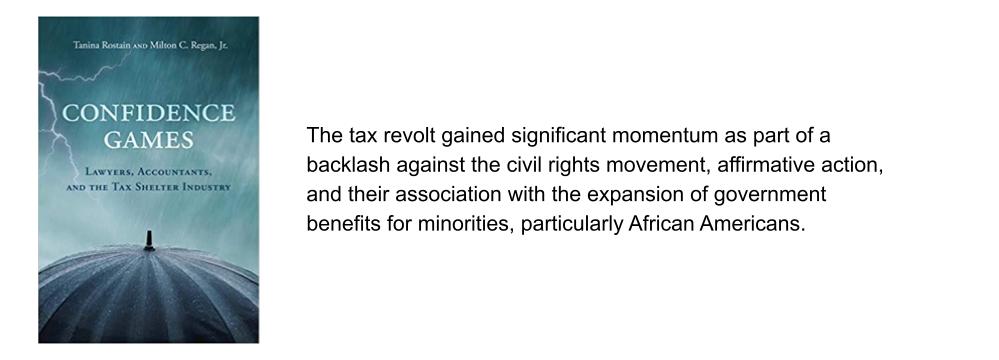
I was tempted to go digging into PACER to see what sort of difference this might make in real terms, but I decided to pass. For a deep analysis of the whole sorry story of turn of the millennium tax shelters check Confidence Games – Lawyers, Accountants, and the Tax Shelter Industry, which I reviewed here.
More Dixieland Boondockery
Dixieland Boondockery is the nickname that the indefatigable Lew Taishoff has given to the syndicated conservation easement cases that have flooded the Tax Court. I have to say that I am feeling kind of vindicated. I had covered easement cases from my earliest days of blogging, because I found them such interesting stories. Here is a roundup of that coverage. Around 2013 I took a call from somebody who was either looking for some consulting or maybe investors. The idea was that people were going to buy land and then sell it to investors who were going to give a way conservation easements. I thought it was about the stupidest idea I had ever heard. The market for undeveloped land is imperfect, but it is not populated with a bunch of idiots so if you go around buying land you will on average be getting it for fair market value. An easement will be worth a fraction, possibly a large fraction, but still a fraction, of fair market value and a tax deduction is a fraction of that fraction. That’s why I called it an industry based on nonsense.
The Tax Court has been plowing through these cases. Jackson Crossroads LLC was an appeal for a Tax Court decision that came down from the Eleventh Circuit on March 25, 2026. There were two partnerships involved. Jackson Crossroads involved a charitable deduction of $23.1 million and Long Branch claimed $13.8 million. Tax Court allowed $1.2 million for Jackson Crossroads and $1.6 million for Long Branch along with the 40% gross-valuation-misstatement penalties. The Elevenses agreed.
The taxpayers had David Aughtry of Chamberlain Hrklicka representing them. He represented Zaxby founder, Tony Townley, in his easement case, which while not syndicated seemed inspired by the valuation techniques prevalent in the industry. That was a refund claim that settled, which I score as a substantial win.
Harman Road Property LLC came from Tax Court Judge Christian Weiler and covered two partnerships Harman Road and Green Rock Properties. Green Rock was allowed an $81,000 charitable deduction and Harman Road was allowed $145,000. They had claim $13.57 million and $18.3 million respectively. That is less than 1% allowed. Unless I missed it Judge Weiler, did not comment on the disparity between what was allowed and what was claimed. He let the numbers speak for themselves. The big values were based on the discounted cash flow of hypothetical aggregate mines.
A prleliminary Hancock County Land Acquisitions LLC opinion was delivered by Judge Lauber, “Scholar Al”, on May 20, 2025. IRS was looking for summary judgement on the penalty approval issue and denial of all ordinary and necessary business expenses ($6,128,493). Lauber gave them what they wanted on penalty approval but did not deny the expenses.
The final opinion came out on May 26, 2026. Scholar Al got to tackle a new theory. He noted that taxpayer did not seek to defend the “outlandish value” of $180,177,000 ($763,462 per acre). Instead they want to use a value based on what the investors paid to buy in to the deal. That worked out to $18,634,933 ($78,962 per acre). Judge Lauber wasn’t buying it.
“We reject this argument. The investors were not purchasing land; in substance, they were purchasing tax deductions. Each investor was promised a charitable contribution tax deduction of $7,477 for every $1,000 invested. As a result, the amount they paid for their partnership interests was (roughly speaking) the aggregate amount of the promised tax deduction divided by 7.477. Neither the investors nor Argive negotiated at arm’s length over the value of the land; the offering was not priced by reference to the value of the land; and the amount the investors paid had nothing to do with the value of the land. Petitioner produced no credible evidence that the investors expressed any view about what percentage of the offering proceeds should be paid to the landowner under arm’s-length standards. We find that the sole focus of their concern was the magnitude of the tax deduction. That number would be the same regardless of how much the landowner was paid for the land.”
Based on comparable sale of land the went with a value $2,360,000. Judge Lauber also disallowed most of the business expense deduction of $6,128,493 including $1,688,944 for “tax loss” insurance,
Not Sure That I Get It
Henry Omozee v Anehru Hamadu was handled by judge Matthew Maddox of the United States District Court for the District of Maryland. Omozee was arguing that the Edo Association of Washington DC Metropolis (EAWDCM) was violating 501(c)(3) and creating an unenforceable contract. The Edo people are an ethnic group primarily native to southern Nigeria. You probably already knew that but I had to look it up.
Anyway EAWDCM had voted to set up a “members fund”. Participants would pay in $200 a year and their beneficiary would get $10,000 on their death. Omozee objected to this program, because he feared that it jeopardized EAWDCM’s exempt status. I think he may have had a point.
Regardless the defendants argued that the court did not have “subject matter jurisdiction’ and the judge agreed. So that was that. There is a little bit of irony in the ruling:
“Here, the Complaint does not include any facts to suggest that any named defendant acted “under color of state law” or violated any right of Plaintiff secured by federal law. Instead, Plaintiff alleges that the creation of a membership bereavement fund by certain members of his charitable organization will result in the loss of the organization’s tax-exempt status. He further claims that the contract Association members entered to establish this fund is void and illegal. Curiously, the relief Plaintiff requests is that this Court compel the IRS, an executive agency, to liquidate the assets of the Association and revoke the Association’s tax-exempt status—the very injury he seemingly sought to avoid before filing suit.”
Helicio Sperandio
Helicio Sperandio was arrested and charged with evading $2.3 million in federal income tax and fraudulently obtaining $377,500 in COVID-19 loans in November of 2025. He owned a painting company. Here is an order issued by senior United States District Judge F. Dennis Saylor IV. (Emphasis added)
“Pursuant to Fed. R. Crim. P. 48(a). the United States Attorney for the District of Massachusetts hereby dismisses the indictment filed on November 13, 2025, which charges the defendant with procuring the preparation or presentation of a false tax return; tax evasion; and wire fraud, in violation of 26 U.S.C. § 7206(2), 26 U.S.C. § 7201, and 18 U.S.C. § 1343, respectively. In support of this dismissal, the government states that the defendant was removed from the United States on or about February 26, 2026, and this dismissal is in the interests of justice.”
Maybe this is indicative of the current administration’s preference for enforcing immigration laws over tax laws.
Fallout From The Employee Retention Tax Credit
I didn’t give a great deal of coverage to the Employee Retention Tax Credit until Lance Wallach asked me to look at it in 2023, when I thought it was already old news. Essentially there were a lot of consultants pushing people to file amended returns to claim a COVID era relief program. Often there eligibility was dubious. Now we are seeing litigation between the consultants and disgruntled clients. CSRA Probation Services, Inc v. ERTC Express, LLC is an example.
CSRA claims that ERTC overclaimed the credit. CSRA went into the IRS voluntary disclosure program and paid the money back. They want the $137,165.11 fee they paid ERTC back. ERTC is looking to enforce the arbitration clause in the contract and wants the case dismissed. Judge Randall Hall ruled on March 6, 2026 that the arbitration should proceed, but will take another look when the arbitration results are in.
In ERTC Express, LLC v HTS Construction, Inc, ERTC is suing to collect its fee. HTS has several counterclaims.
“(1) unjust enrichment; (2) breach of contract; (3) fraud in the inducement; (4) constructive fraud; (5) negligent misrepresentation; (6) breach of Georgia’s fair business practices act; and (7) bad faith”
ERTC moved for dismissal. Judge Leslie A. Gardner dismissed all the counter claims.
Moving On
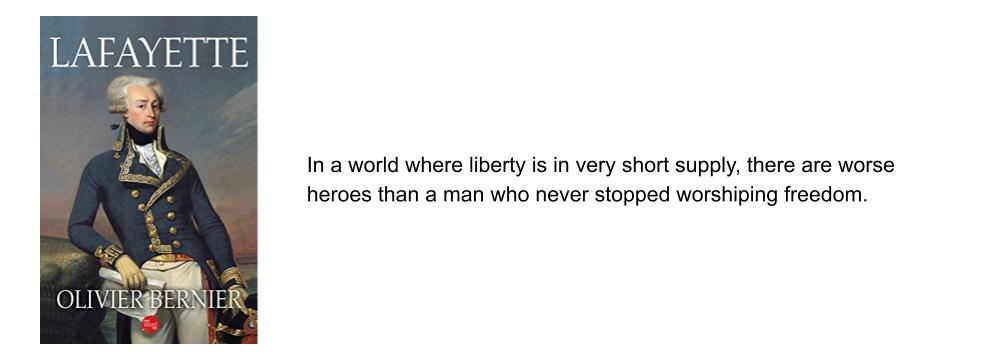
I don’t know if I will ever catch up again, but I will keep trying. I had really good excuses last year. There was my Lafayette project and major health issues, happily resolved, for myself and my partner. Now there is just advancing age and a sort of demoralization as I question the whole enterprise of helping people be tax compliant without overpaying.
Correction
When first published, I wrote up an earlier decision on Hancock Country Land Acquisitions and neglected the more recent ruling on the valuation.

For great value in continuing professional education check out the Boston Tax Institute.
If you would like to do business with Your Tax Matters Partner email yourtaxmatterspartner@gmail.com.
Peter, as someone who approaches your writing primarily as a reader rather than a tax professional, what I have always appreciated is how you accent the human story buried inside the legal machinery. This post is a perfect example. The Daugerdas case practically reads as a noir narrative, chronicling a man whose criminal conduct was, in the court’s report, “in a class of its own,” serving nine years after a Biden commutation and currently tangling with the IRS over restitution collection procedures. The institutional relentlessness is markedly dramatic.
I thought your own voice came through most clearly in the conservation easement section, which for me was the most satisfying aspect of this matter. I envisioned an image of you answering that 2013 phone call and recognizing the scheme as nonsensical, only to watch it flood the tax court for the coming decade. This says quite a bit about your instincts and how the system takes an ungodly long time to catch up with bad ideas. Juage Lauber’s takedown of the investor-based valuation theory was persuasive. “The investors were not purchasing land; in substance, they were purchasing tax deductions” reduces an entire argument to obsolescence.
The closing note about demoralization is disheartening and personally revealing, and I hope it passes. Your readers know that clear, honest tax writing has serious value, despite the files piling up.
Thanks. I just finished deleting 34 spam comments. This is the gold that makes all that dross worthwhile.