



















Behind we fall again, as Yoda would say. As I write this my professional brothers and sisters who have not had the good fortune to retire are struggling with or recovering from September 15, one of the toughest due dates of the year. I do have a good excuse as I was in the hospital for a few days at the beginning of the month and a little preoccupied with making some lifestyle adjustments. Let’s see how long it will take to get through August developments starting with the Reeds who get a fullish treatment.
Who Dealt This Mess?
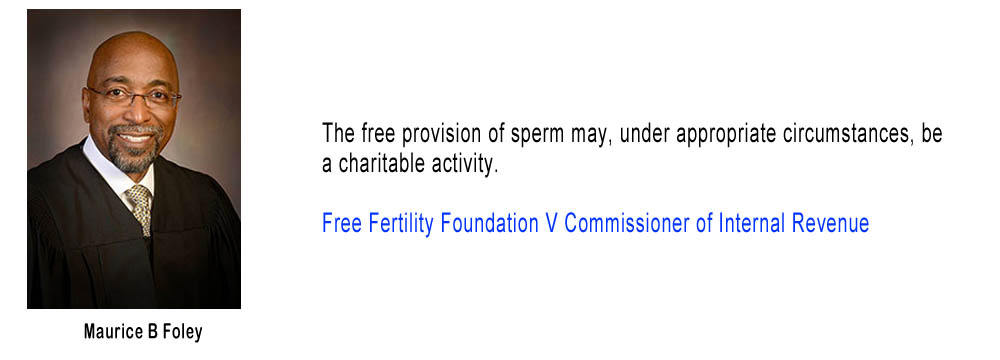
The story of Scott and Stacy Reed in Tax Court Judge Toro’s opinion TCM 2026-64 is messy. It concerns the 2012 to 2015 returns of Scott, a real estate advisor and entrepreneur, and Stacy, a physician, Judge Toro lays the questions out at the start:
” (1) whether the Reeds underreported income from various sources; (2) whether the Reeds are entitled to deductions for (a) various [*2] payments and transfers, (b) amounts they paid to lease farmland, and (c) amounts they claimed to have paid as interest; (3) whether the Reeds are entitled to a general business credit for the taxable year 2012; and (4) whether additions to tax and penalties apply to the Reeds for the years at issue.”
Scott’s real estate business ran through Reed Realty Advisors LLC, a disregarded entity.
“Neither party has introduced into evidence the complete books and records of Reed Realty Advisors. Additionally, although Reed Realty Advisors had its own bank account, during the years at issue, Mr. Reed also used the Reeds’ personal bank accounts for deposits and withdrawals related to Reed Realty Advisors.”
There were multiple entities involved and money flowing here, there, and everywhere. There was the sale of partnership interests with no documentation of basis. Transfers to partnerships that the Reeds expensed were recorded by the partnerships as loans inspired Judge Toro to comment:
“Under the double-entry accounting system developed during the Renaissance, each entry in a general ledger has two sides – a debit and a credit. “
There is unreported income and what looks like unreported income and proves not to be.
There is a list of expenses allowed and expenses disallowed at the end of the opinion, so it seems that the four-day trial may have been worth it, but still, they really need some accounting going on in their entities.
Ed Zollars in Current Federal Tax Developments told the whole story pretty well with his title Commingled Funds, Unsubstantiated Deductions, and the Binding Form of Transactions: A Technical Tax Analysis of Reed v. Commissioner and has a more detailed conclusion:
“The Tax Court’s decision in Reed v. Commissioner reinforces several fundamental principles of federal income tax law. For tax professionals, the primary takeaway is the absolute necessity of strict recordkeeping under Section 6001. Commingling personal and business accounts, failing to maintain complete double-entry general ledgers, and treating disregarded entities as direct extensions of personal finances will routinely prove fatal under audit. Additionally, the case highlights that taxpayers are strictly bound by the chosen legal form of their transactions and cannot retroactively recharacterize capital contributions or loans as ordinary business expenses when their ventures collapse.”
And, as Gomer Pyle would say “Surprise, surprise, surprise”, Lew Taishoff had the same titling inspiration I had with “Who Dealt This Mess- Part Deux“. He has a great explanation for it:
“In another millennium, On the Hill Far Above, when I had a lot fewer wrinkles, a lot less fat, and a lot more hair, I stood smoking a pipe (“How quaint” my native-born Texan granddaughters would say) in a smoke-filled cardroom. In memory I see Jersey Ed, Slater, Barry, and Joel, and one of them slapping his cards on the table and exclaiming “Who dealt this mess?” even if he himself had dealt the bridge hand. It’s been sixty years and more, but I remember.”
Playing bridge in college – one more thing I have in common with Mr. Taishoff.
He has a similar view on the value of the trial:
“So I want to give a Taishoff “Good Try, Second Class” to the trusty attorneys for Scott L. Reed and Stacy N. Reed, T. C. Memo. 2026-64, filed 8/5/26, for rescuing even the Allowed Deductions, Exhibit A, (T. C. Memo. 2026-64, at pp., 41-45) and staving off even a modicum of the unreported income IRS heaped on their clients’ heads.”
The trusty attorneys were Tyler H DeWitt and Clinton DeWitt.