





Photographing, Writing, Flying But Ultimately Not Deducting
The Court also had issues with substantiation. Although he had receipts for his expenses, they were not correlated with the business purposes of the expenditures. Mr. Oros was representing himself in Tax Court, which is understandable given the relatively low stakes. I’m wondering if the case might have gone the other way if he had had a tax litigator in his corner. He had consulted with a CPA on the deductibility of his expenses before filing, which at least saved him penalties. Lew Taishoff did a nice piece on this case titled “I Could Write a Book.”

Student Loans and Bankruptcy – The Debate Continues
Remember that as we speak, the true default rate likely reaches or exceeds 40% and that the general public is quickly learning about the systemic corruption that has been festering across the schools, lenders, and federal government for years. I would say that if the higher education decision-makers (including Congress and the Executive branch) continue to ignore this problem for any significant length of time, they can expect the full-scale evaporation of public confidence in the lending system, and morphing of public fear and compliance into deep resentment and focused anger. In this environment, few will pay their student loans, and the bureaucrats and electeds who, today, dishonor themselves through gross neglect of the public interest can look forward to explaining why they failed to act at this critical time when all that will follow could have been efficiently averted.
Follow Me
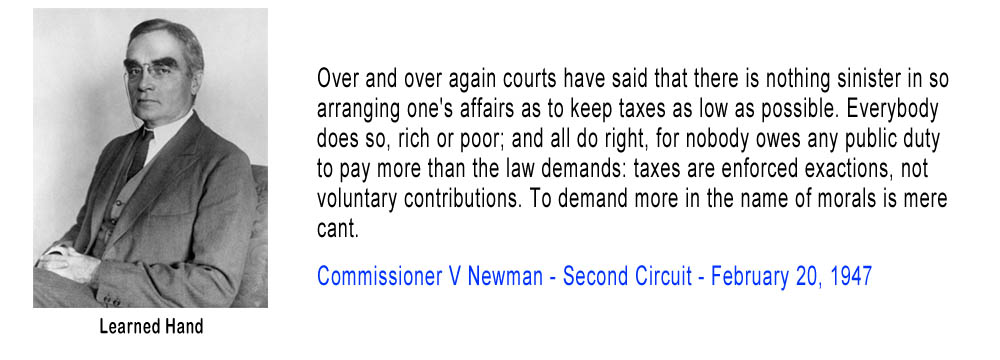
Over and over again courts have said that there is nothing sinister in so arranging one’s affairs as to keep taxes as low as possible. Everybody does so, rich or poor; and all do right, for nobody owes any public duty to pay more than the law demands: taxes are enforced exactions, not voluntary contributions. To demand more in the name of morals is mere cant.