Conservation Easements -Is IRS Burning The Forest To Save It?
I am not a big fan of using tax incentives to support worthy goals, but it seems that there is no stopping it. As it presently works conservation easement deductions represent a potential for abuse that will continue to exist even after DOJ and class actions attorney finish their march through Georgia which may wreck the professional lives of many accountants, lawyers, appraisers and others attached to the industry.
A better model might be what is done in low-income housing. There is a credit that is limited by state population and doled out annually. That creates an incentive to use the federal tax benefits more wisely.
Senate Bill Addresses Remote Worker State Tax And Gig Worker Issues
It strikes me that a state hard hit by the “state tax certainty” rule may be New York, since employers will have the option of treating workers not able to come into Manhattan from New Jersey as working in New Jersey. New York tends to be very aggressive in bringing people into its jurisdiction and has a high rate.
Massachusetts had issued a ruling to the effect that during the crisis people would be treated as continuing to work wherever they had been working. Under this legislation, employers could treat people working from home in New Hampshire as being in New Hampshire. New Hampshire does not tax wages.
I am sure there are other pairings of high and low tax states that I am not thinking of. And the high tax states tend to be blue, so maybe there is some politics to this measure, which overall is pretty reasonable.
Follow Me
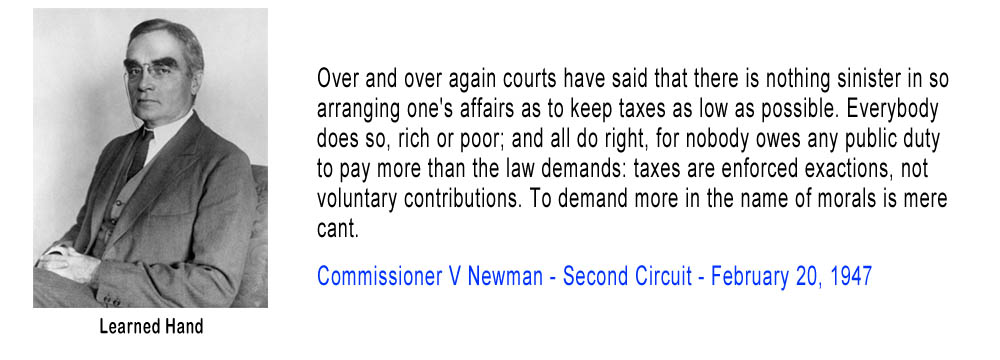
Over and over again courts have said that there is nothing sinister in so arranging one’s affairs as to keep taxes as low as possible. Everybody does so, rich or poor; and all do right, for nobody owes any public duty to pay more than the law demands: taxes are enforced exactions, not voluntary contributions. To demand more in the name of morals is mere cant.