
































































Denial Of $33M Deduction That Yielded $2M To University Of Michigan Upheld On Appeal
The Tax Court went with zero deduction, but not based on the sham theory. On its own, the Tax Court came up with failure to substantiate based on that missing number on Form 8283. There is something really satisfying with that result. All these smart people with complicated math stuff planning the deal and attacking it and the Tax Court blows it up with what would be a review comment that a senior accountant with three years experience would have given an associate. RTI. (Read the instructions).

Don’t Try To Create Tax Basis With Journal Entries
The lesson is a discouraging one for accountants. I went digging in PACER and found the schedule that Meruelo’s accountant prepared and they are really good work. A good bit of effort must have gone into them. But they end up meaning nothing.
Those of us who think in double entry might believe that Meruelo should have gotten his basis and been allowed the loss. Throughout most of my career, I would have thought there was no problem. But years of reading decisions like this have caused me to conclude that the only people impressed by an accountant’s entries are other accountants .
Reilly’s Fourth Law of Tax Planning – Execution isn’t everything, but it’s a lot. Here we have an exception. Execution actually was everything. If the money that Meruelo purportedly loaned to Merco had actually passed through his hands and been recorded as a loan or a distribution to him, he would have had his basis and his loss
Follow Me
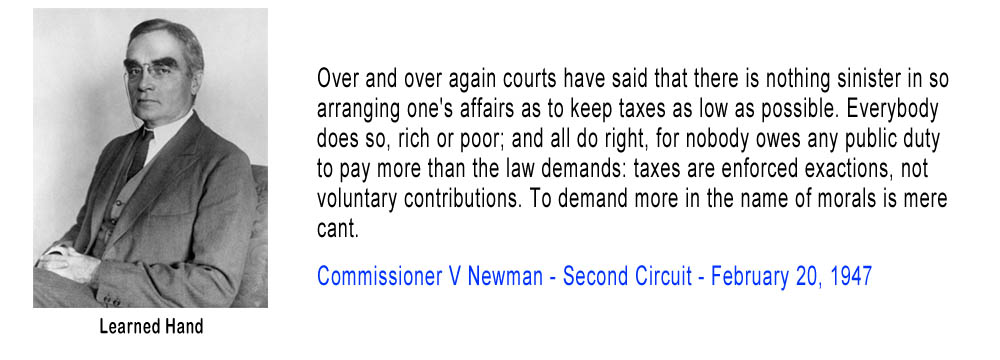
Over and over again courts have said that there is nothing sinister in so arranging one’s affairs as to keep taxes as low as possible. Everybody does so, rich or poor; and all do right, for nobody owes any public duty to pay more than the law demands: taxes are enforced exactions, not voluntary contributions. To demand more in the name of morals is mere cant.