




Tax Cut Bonanza For Retailers And Wholesalers
f the aggressive attitude toward inventory sticks and you combine it with other relaxations in allowable accounting methods (most importantly cash basis) and the unlimited expensing of most capital assets, businesses under $25 million of receipts (that’s indexed for inflation) and their owners and lenders will no longer be taxed on income. They will be taxed, in effect, on what is called free cash flow.
A common measure is to take the earnings before interest and taxes multiplied by (1 − tax rate), add depreciation and amortization, and then subtract changes in working capital and capital expenditure
I can’t rule out the notion that this might not be such a bad idea. Certainly, free cash flow is a measure that is highly correlated with ability to pay. On the other hand, a system like that seems destined to fuel wealth inequality and also encourage gaming. If Mr. Potter is having a better year than he had planned, he can have his suppliers transfer title to goods that have not shipped. There will be a real incentive for channel stuffing, particularly from suppliers that are public companies more interested in earnings growth and less tax-sensitive.
Law Professor Argues New Pass-Through Rules (199A) Are Horrible
The successful job creators are pretty rare and a lot of them are very tax-sensitive. So 199A has created a strong incentive to create your own job. If you do, you can be making pretty good money (over $300,000 with a low earning spouse)and getting the 20% benefit regardless of what you do and whether you employ anybody. If you are making really good money, though, you have a strong incentive to have W-2 employees, as opposed to a bunch of gigsters.
The professions where the partnership form is common and most of the business owners are actually people just practicing the craft exclude the big earners from the benefit.
It may well be that most of the benefit is going to the children and grandchildren of yesterday’s jobs creators – the new gentry. The original version of the tax bill in the House was custom designed for the new gentry. What ultimately passed benefitted a much broader class of people whose income is not from W-2 employment or simple investment – the job creators, their progeny and working stiffs who make their own jobs.
Follow Me
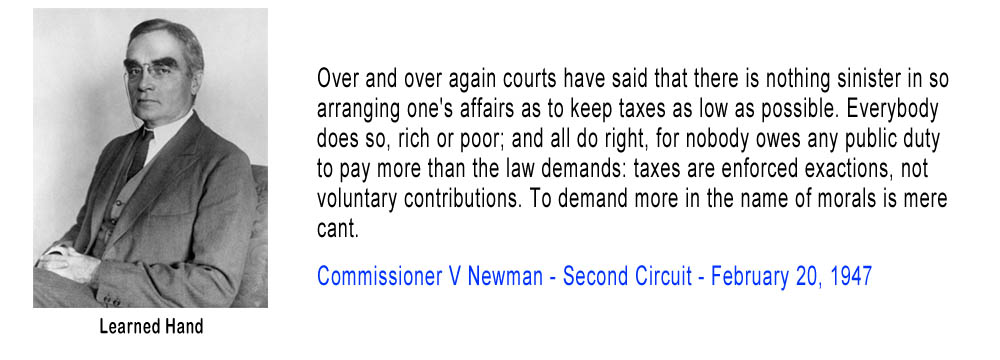
Over and over again courts have said that there is nothing sinister in so arranging one’s affairs as to keep taxes as low as possible. Everybody does so, rich or poor; and all do right, for nobody owes any public duty to pay more than the law demands: taxes are enforced exactions, not voluntary contributions. To demand more in the name of morals is mere cant.