
New Tax Law Immediate Write-Off Increases Demand For Tax Savvy Engineers
One thing that troubles me about these discussions is that the implication is that cost segregation is some sort of election. In principle, if there is all sorts of five-year property mixed in with your building, you really should break it out to file an accurate return. Also, in principle, the Cohan rule should apply, if you are too thrifty to hire an engineer.
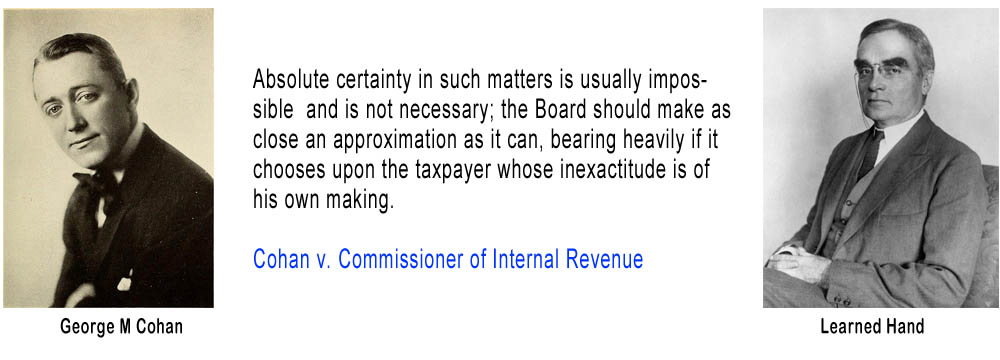
I discussed the application of the Cohan rule (Named for the famous Broadway producer who was too much of a yankee-doodle dandy to keep track of his receipts) with Mr. Bagne. One of the things he admitted was that if somebody was knocking out multiple copies of the same sort of building, they should be entitled to a pretty deep discount on subsequent studies after the first one. Applying that logic I could see some developers taking the function in-house, although I suspect it might not be worth the trouble.
Forfeited Deposit Income Ordinary Not Capital Gain
Why Capital Gain?
Code Section 1234A provides that gain or loss attributable to the cancellation, lapse, expiration or other termination of a right or obligation which is or would be a capital asset in the hands of the taxpayer shall be treated as gain or loss from the sale of a capital asset. Well, there you have it. If CRI-Leslie had sold the hotel it would have gotten capital gain treatment on the sale. Nobody questions that. So it should get capital gains treatment on the forfeited deposit it got to keep if you follow along with Code Section 1234A.
Why Not Capital Gain?
There is this subtle nuance, that can be quite important, but is often ignored. CRI-Leslie was not just sitting on the hotel, holding it as an investment. It was operating and they were taking depreciation deductions. That fact throws it out of the definition of a capital asset which is in Code Section 1221. Code Section 1221 defines capital asset negatively. It is pretty much everything except certain things including:
Follow Me
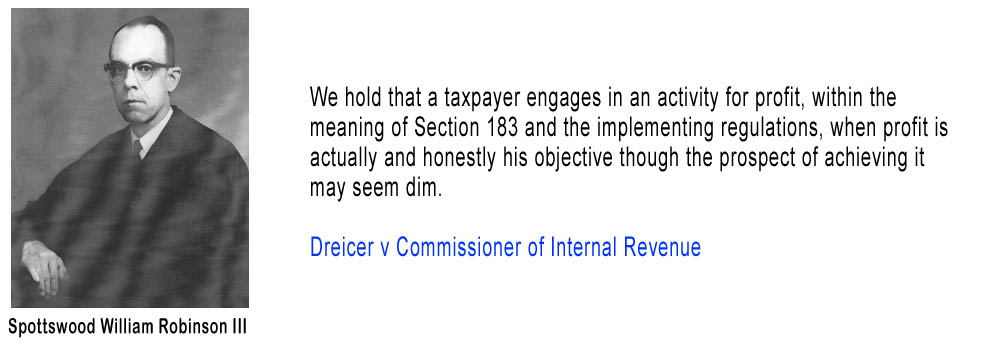
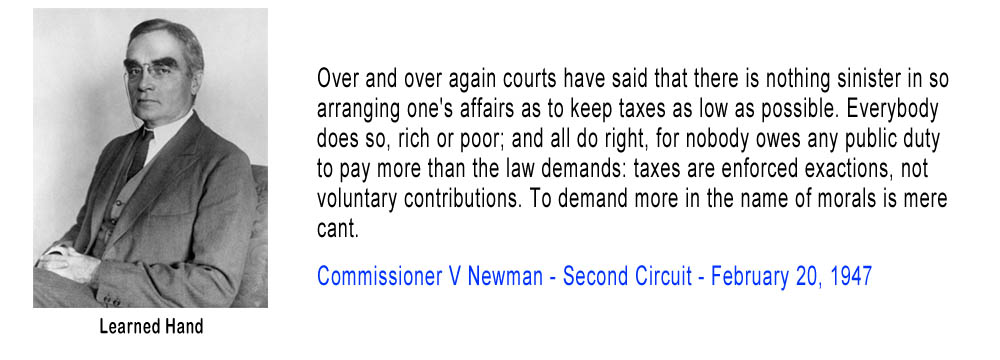
Over and over again courts have said that there is nothing sinister in so arranging one’s affairs as to keep taxes as low as possible. Everybody does so, rich or poor; and all do right, for nobody owes any public duty to pay more than the law demands: taxes are enforced exactions, not voluntary contributions. To demand more in the name of morals is mere cant.