
















Florida Man Sticks Ex With Tax Bill – Tax Court Helps A Little
Evaluating all of the facts, we conclude that it would be inequitable to hold petitioner liable for any of the tax liability associated with business because of petitioner’s relative lack of sophistication and the roles of _______ and petitioner in their marriage. Here we take into account petitioner’s credible testimony that __________ had convinced her about his business prospects, his duplicity throughout their marriage, and his verbal abuse. On this record it would not be equitable to require her to pay his liability. Therefore, we will grant petitioner relief from joint and several liability under section 6015(f) for the taxes associated with _______ business.
Farmer Tax Break May Help Doctors And Lawyers – And House Cleaners – Among Others
Putting aside some complications and exceptions a corporation qualifies for this treatment if it is “operating on a cooperative basis”. There is no election involved in being considered a cooperative or to be more precise “a corporation operating on a cooperative basis”. (We’ll just use cooperative from here on in. Just remember we are using the tax definition.) Corporations “operating on a cooperative basis” file Form 1120-C
Here is why you probably have heard of Subchapter S, but not Subchapter T. In 2015 according to IRS Publication 6292, there were 6,893,412 corporate income tax returns (1120) of all types filed. Of those, 4,717,161 were 1120-S. Form 1120-C – not so many, only 9,763.
Follow Me
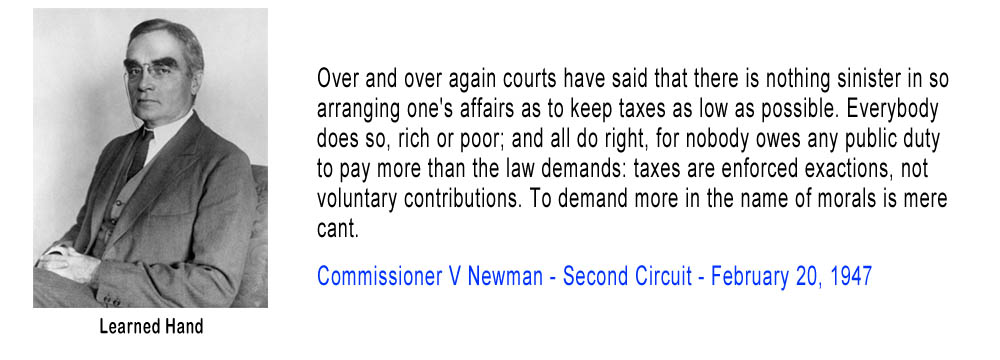
Over and over again courts have said that there is nothing sinister in so arranging one’s affairs as to keep taxes as low as possible. Everybody does so, rich or poor; and all do right, for nobody owes any public duty to pay more than the law demands: taxes are enforced exactions, not voluntary contributions. To demand more in the name of morals is mere cant.