Tax Free Housing Benefits For Clergy Will Be Safe For The Present
Tax news of interest to clergy has been drowned out by coverage of the Tax Cuts and Jobs Act. Last week on December 13, Judge Barbara Crabb issued her promised ruling on how her earlier decision that Code Section 107(2) – the parsonage exclusion – will be implemented. The ruling is not surprising, but clergy may be relieved that their cherished tax break is safe – probably for a couple of years , particularly since a Congress desperate for revenue raisers to pay for massive tax cuts for the job creators along with some crumbs for the working class did not even threaten to touch parsonage.
The House did threaten a different housing exclusion. Code Section 119 allows the exclusion of housing provided for the convenience of the employer. The House bill proposed a $50,000 cap on that exclusion. I don’t know if it is a coincidence but that is in the ballpark of the housing allowance that those serving in the military get to exclude (It varies by region and rank – more by region. You can check it out here). That would also seem to be a reasonable cap for “ministers of the gospel” particularly given what the inspiration for the predominant religion in this country had to say on the subject of housing.
New York Times Has Trouble Finding Tax Accountants To Discuss Tax Bill
The opening paragraph tells us about the fate of Jonathan Traub Managing Principal, Tax Policy Group at Deloitte. You have to understand something. One of my running jokes lately has been referring to the “failing New York Times”. That is always meant ironically as a reference to our President’s characterization. I love the New York Times and always have since Mr. Moroney required our sophomore class at Xavier High School to read parts of it every Sunday.
Remember the headline – “Tax Bill Is Great for Accountants – Unless They Have Holiday Plans”. The fellow in the lead paragraph – Jonathan Traub – seems like a tremendous guy. One problem, notwithstanding that Mr. Traub works for one of the top accounting firms in the country, he is not an accountant and based on his resume has never been one, nor does he even have the most basic qualifications to be one.
Follow Me
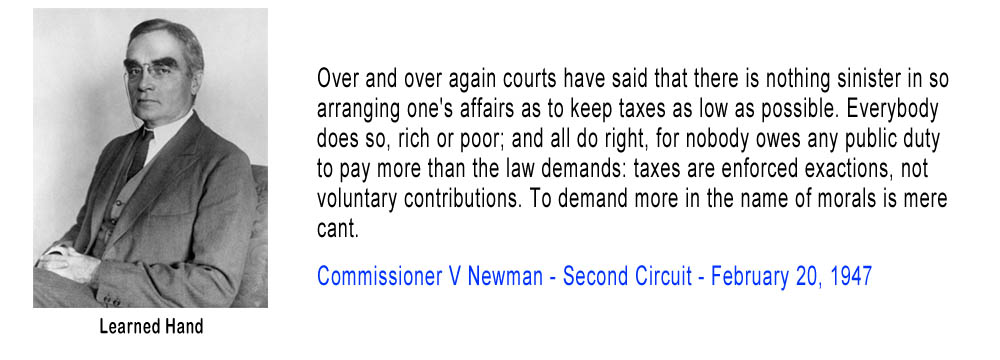
Over and over again courts have said that there is nothing sinister in so arranging one’s affairs as to keep taxes as low as possible. Everybody does so, rich or poor; and all do right, for nobody owes any public duty to pay more than the law demands: taxes are enforced exactions, not voluntary contributions. To demand more in the name of morals is mere cant.