






















































FASB Confirms Corporate Rate Cut Has Immediate Effect On Earnings
Berkshire Hathaway has the largest positive adjustment – $33 billion. That is more than Berkshire’s net income of $27 billion in 2016. Next is AT&T with a $25 billion positive adjustment. That is even more dramatic than Berkshire when you consider AT&T’s $13 billion net income in 2016. The positive effect on Verizon is $20 billion compared to net income of $13 billion in 2016. Comcast’s earnings rise by $15 billion, Pfizer and Exxon Mobil have $13 billion positive adjustments.
Negative Income Adjustments Over $5 Billion
The biggest loser is Citigroup with a $20 billion negative adjustment followed by $15 billion for General Motors $9 billion for AIG and $8 billion for Bank of America.

11th Circuit Denies Tax Deduction For Gay Man’s Reproductive Expenses
Was the money that a homosexual man paid to father children through in vitro fertilization—and in particular, to identify, retain, compensate, and care for the women who served as an egg donor and a gestational surrogate—spent “for the purpose of affecting” his body’s reproductive “function” within the meaning of I.R.C. § 213? And second: In answering the statutory question “no,” and thus in disallowing the taxpayer’s deduction of his IVF-related expenses, did the IRS violate his right to equal protection of the laws either by infringing a “fundamental right” or by engaging in unconstitutional discrimination?
Follow Me
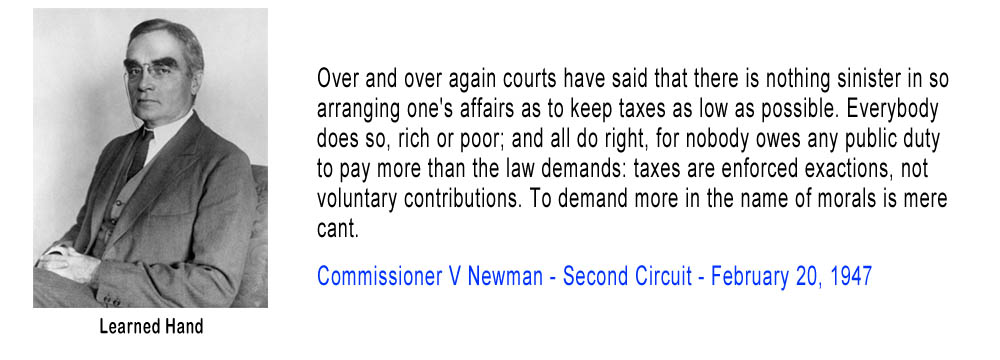
Over and over again courts have said that there is nothing sinister in so arranging one’s affairs as to keep taxes as low as possible. Everybody does so, rich or poor; and all do right, for nobody owes any public duty to pay more than the law demands: taxes are enforced exactions, not voluntary contributions. To demand more in the name of morals is mere cant.