














News From The Boston Tax Institute
Lu Gauthier of the Boston Tax Institute has given me permission to reproduce his email blasts. BTI is a great value for live tax continuing professional education....

Conservation Easements – Tax Court Lets Owner Sell Them Or Give Them But Not Both
To determine the amount of your charitable deduction you need to get an expert appraiser. Generally, there is not an active market for conservation easements, so the value is determined by valuing the property at its “highest and best use” (i.e. what brings the most money) and subtracting the value of the property in the current use to which it is now to be restricted. It’s the “highest and best use” that is the fantasy number. It is something that nobody is ever going to do so why not make it as grand as conceivable. Since practical obstacles don’t have to actually be overcome, they can be safely ignored.
Follow Me
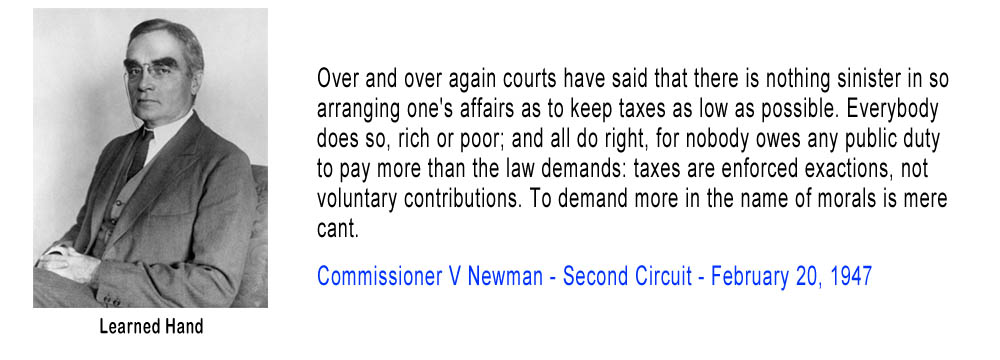
Over and over again courts have said that there is nothing sinister in so arranging one’s affairs as to keep taxes as low as possible. Everybody does so, rich or poor; and all do right, for nobody owes any public duty to pay more than the law demands: taxes are enforced exactions, not voluntary contributions. To demand more in the name of morals is mere cant.