







Should President Obama Offer Amnesty For Legal Residents Behind On Taxes?
Given the number of delinquent accounts out there you would think I would know a few people who have them. Well I don’t, but there is this friend of a friend of mine who knew somebody I could speak to. You know how it goes. I asked this fellow or gal, whom I will call Tracy, whether a program like this might be meaningful. Tracy had a large outstanding balance that he or she never paid. There has been no word from the IRS for some time, but it hasn’t been ten years. Tracy, as usual, has no money now, but is certain that if an offer came in for a sum certain payable in three months arrangements might be made.
It seems like it might be a good deal all the way around. One more citizen out of the shadows, a bird in the hand for the government and IRS resources freed up to fight identity theft or enforce Obamacare – whatever – as long as its not harassing the Tea Party. That is counterproductive.
Seventh Circuit Kicks Parsonage Can Down The Road – Some Commentary
But the Establishment Clause isn’t the end-all, be-all of constitutionality: the Constitution is just as clear about the standing requirement. And in this case, the FFRF didn’t do anything at all to meet that bar; ultimately, they just argued that, because they would have been denied, standing was irrelevant. And the stupidity and laziness of that argument is underscored by the Seventh Circuit’s footnote 3: all they had to do, for standing purposes, was file their returns claiming the section 107 exclusion. Or file an amended return claiming it. Sure, they lose and they have to pay the unpaid taxes with interest. But they also overcome the bar to having their suit adjudicated.
I know that things like “standing” don’t really resonate with the general public (and I’ve read a couple blogs that treat this like it’s a substantive victory for the pastoral housing exclusion). But to a large degree, the validity of our judicial system rests on its procedural fairness—maybe the courts get things wrong sometimes, but at least they follow a fair, knowable procedure, giving litigants a legitimate shot at justice. By attempting to circumvent that (constitutionally-prescribed) procedure, the FFRF and the district court risked not only the precise decision that the Circuit delivered, but also undermining the very Constitution they try to enforce.
Follow Me
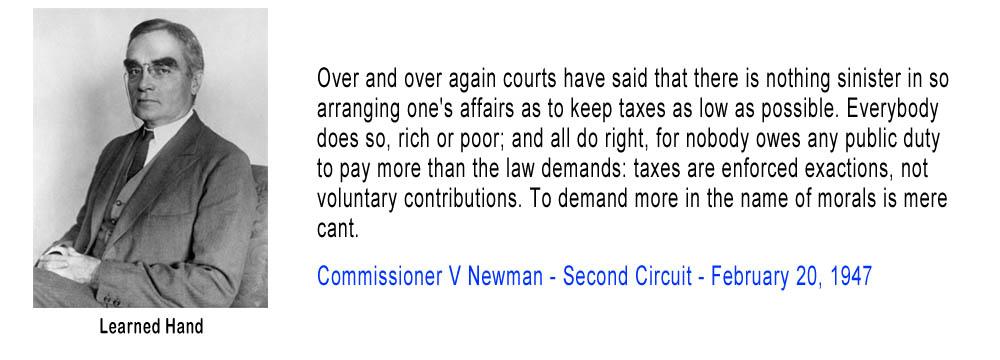
Over and over again courts have said that there is nothing sinister in so arranging one’s affairs as to keep taxes as low as possible. Everybody does so, rich or poor; and all do right, for nobody owes any public duty to pay more than the law demands: taxes are enforced exactions, not voluntary contributions. To demand more in the name of morals is mere cant.