

































Most Recent Posts

Tax Court Omits Key Sentence In Ruling Against Taxpayer
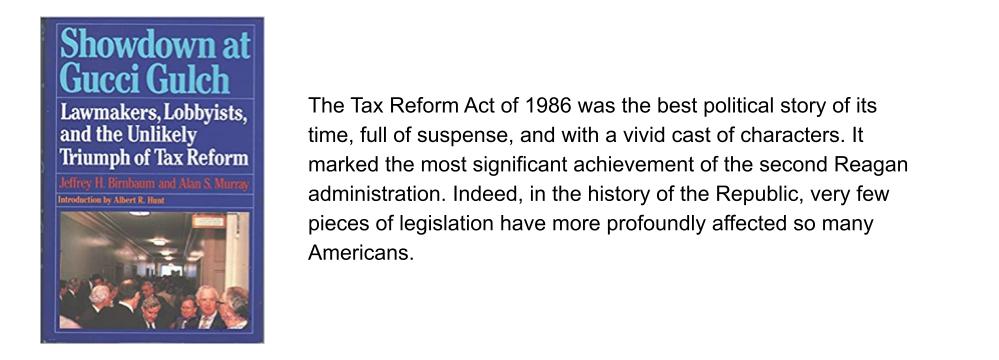
The case involved the activity grouping rules of Code Section 469, the silver bullet of the Tax Reform Act of 1986, which was supposed to end all tax shelters forever. When it comes to the activity grouping rules, there are three types of tax practitioners: those who are, at most, vaguely aware of them; those who have studied them intently and remain somewhat bewildered; those who claim to understand them. The third group can be divided between people who have deluded themselves and liars.
Robert Redford’s New York Tax Trouble Provides Lessons For Planners
Most states follow federal principles pretty closely in computing state taxable income but note well the caveats in that statement. “Most states” and “pretty closely”. It probably came as a very unpleasant surprise that inserting an S corporation into the chain of tiered entities can make a big difference in New York state’s view of the transaction, but there you have it

The OID Fraud And Criminal Gullibility
I have to say that I have some sympathy with the perspective that a reasonable person seeing the refund checks might want to take another look at the scheme. If they were incapable of understanding the reasoning behind the scheme and what OID actually is, it could be hard to resist. Something tells me that it might be people other than Ms. Rampton, who really belong in federal prison and that she is, herself, a victim of this scheme.
IRS Stampedes A Cattle Shelter
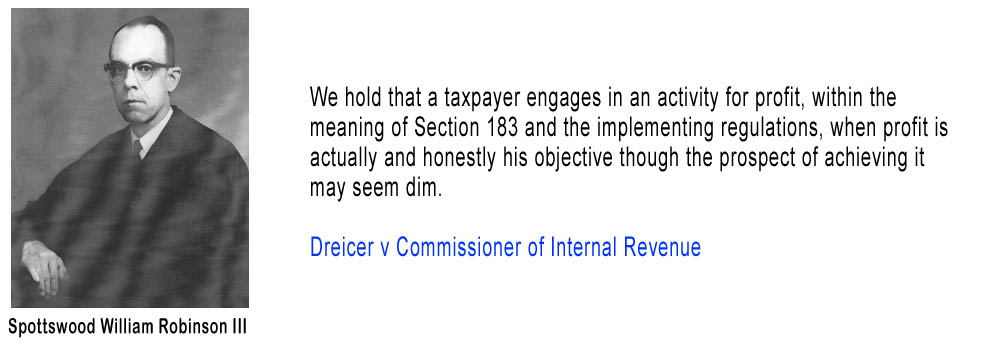
Interestingly, in attacking Mr. Gardner’s cattle activity, the IRS passed over both the silver bullet and the stiletto to go for the blunt instrument – Section 183. Section 183 is sometimes called the “hobby loss section”, but its application is much broader. Basically, if you post losses from an activity in which you are not trying to make a profit you can be denied those losses under Section 183. It is much worse than having the losses deferred under the passive activity loss rules. It may turn out to be even much, much worse than having the losses suspended under the at-risk rules, but we will save that for the end.

For Property Tax Exemption Culture Not As Good As Charity
It is difficult to find a clear element of charity in Plaintiff’s stated purpose. Photography education and public awareness are culturally enriching, but not necessarily charitable. Plaintiff has a building with a gallery that displays photography, classrooms for photography classes, darkrooms, and digital photography laboratories. The public is free to stroll through the gallery looking at pictures on the walls and attend several lectures each year free of charge. However, photography classes are taught for a fee and the public must pay to use Plaintiff’s photography laboratories, darkrooms, and studio….
Alimony Deduction Requires Good Substantiation
But it gets more complicated. There was a $63,500 check that was included in the substantiation of a total alimony deduction of $90,265.67. The check was issued eight days after the required property settlement. “Spousal Support” was written in the memo section of the check, but that was crossed out.
Mr. Peery argued that the property settlement had been paid from other sources and that the $63,500 check was his ex-wife’s share of a capital gain. Just one of those crazy coincidences. It happens. Unfortunately, he was unable to substantiate the other $63,500, leaving the IRS unsatisfied and the Tax Court agreeing, The Court also upheld the accuracy penalty.

Connecticut Limits $60 Million NOL Carryback
Recognizing that Connecticut individual state income taxes are a creature of statute, see § 12-700 et seq., the lack of statutory authority to deduct NOLs arrived at under federal tax laws, precludes the plaintiffs from deducting NOLs from CAGI rather than federal taxable income. NOLs were created under federal tax laws to deal with excess business losses used to offset positive income years arrived at under federal tax laws. Federal tax laws provide for the limitation on the use of NOLs to taxable income rather than AGI. This is more in line with the application of federal tax concepts to Connecticut tax laws. Considering all of the factors in this case, the only conclusion for the court to arrive at is that the plaintiffs are limited to applying their federal NOLs to federal taxable income rather than to CAGI, which is, in fact, federal AGI.
Constitutionally Challenged Co-defendant Does Not Create Mistrial For Tax Fraudster
I learned the basics of what goes into OID computations when I was getting a master’s degree in applied mathematics, but that probably makes it sound a little harder than it is. Just remember (1+r)^t. As a matter of fact, with excel you don’t even have to remember that anymore, but I still use it. I found though that it was pretty tough to find a staff person to work on the OID computations that a client of mine generated. Remember the population I was drawing from had at least bachelor’s degrees in accounting and had grown up using computers. It really seems that people for whom present value concepts become intuitively obvious are rather rare. This is what may account for the wackadoodle redemption theorists latching on the OID form, since they are constitutionally incapable of understanding what OID actually is and will not find too many people who are able to explain it to them. What is really sad is that the IRS systems were so porous that the technique often worked on a superficial level.

Org Tries Exempt Status Multiple Choice – IRS Answers None Of The Above
It would seem that the N company could just sponsor this program with the dealers kicking in or not. Certainly having all those foremen get together to swap war stories and best practices would be good for the brand. Whatever was spent would be an ordinary and necessary business expense. The new IRS Commissioner is going to greatly streamline the exempt application process, which is a good thing in some ways, because the IRS should focus on collecting taxes. On the other hand, you should keep in mind that exempt status should add absolutely nothing to an organization’s credibility. If the organization implies otherwise, kick your bs detector into high gear.
John Koskinen Indicates IRS Revolving Door Is A Feature Not A Bug
One comment that makes me suspect that Mr. Koskinen might be the right guy for the job is this.
I was telling somebody earlier, my experience in organizational turnarounds is that people are never the problem. It’s the structure, the leadership, the resources you’re given. This is the best workforce I’ve ever been associated with at the front end of a start-up, and it’s because there’s a mission.
It reminds me of a quote I have seen in various forms about the military, which my cursory research indicates is attributed to Napoleon – “There are no bad soldiers, only bad officers.”