


Most Recent Posts
Gettysburg Day 2 – Heading Into Action
The board game Gettysburg by Avalon Hill was published in 1958 and is ground zero of the historical simulation board game hobby. I could not help but brag about the vintage copy that accompanied me on the trip and one of the GGG told me that they had laid a copy on the table the previous night to plan their day.
Walking In Armistead's Footsteps 150 Years Later – Gettysburg Day 3 – Pickett's Charge
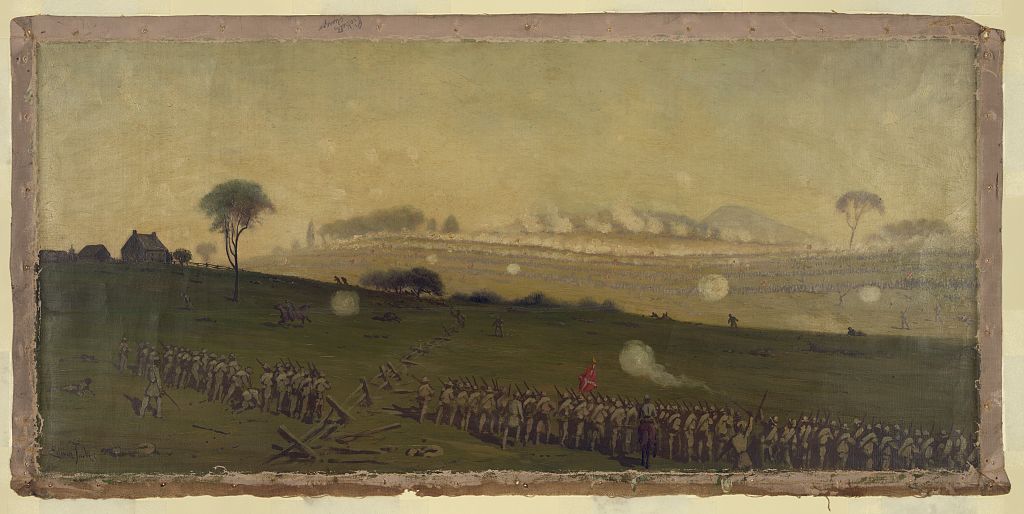
The monuments on Cemetery Ridge call it “Longstreet’s Assault”, but it goes down in history and popular imagination as “Pickett’s Charge”. Longstreet’s Assault is more accurate, since Pickett commanded only one of the three divisions. I thought that shift might have been post-war revisionism, since Longstreet fell out of favor among Lost Cause historians. Fred Wieners, our tour guide on Saturday, told me that it was more a matter of Pickett being popular with the Richmond press. He also told us that the idea of a frontal assault on the center after a heavy artillery barrage was probably inspired by the Battle of Solferino in 1859. It worked then. The consequence of the Battle of Solferino was the independence of Italy.
Did Doris Kearns Goodwin Blow It At Gettysburg ?
I think one of the things that we as individual Americans need to always remember is that if something really bad happens in our community, the outpouring of generous support and, if required acts of heroism, will be, in some arbitrarily large percentage, from people with whom we profoundly disagree on deeply held moral beliefs.
Did Doris Kearns Goodwin Blow It At Gettysburg?
This was originally published on forbes.com on July 3, 2013. This reissue is scheduled to post one year from the date of the opening ceremonies for the Gettysburg...
Gettysburg Day 2 – The Advantage of Moving Down The Hill
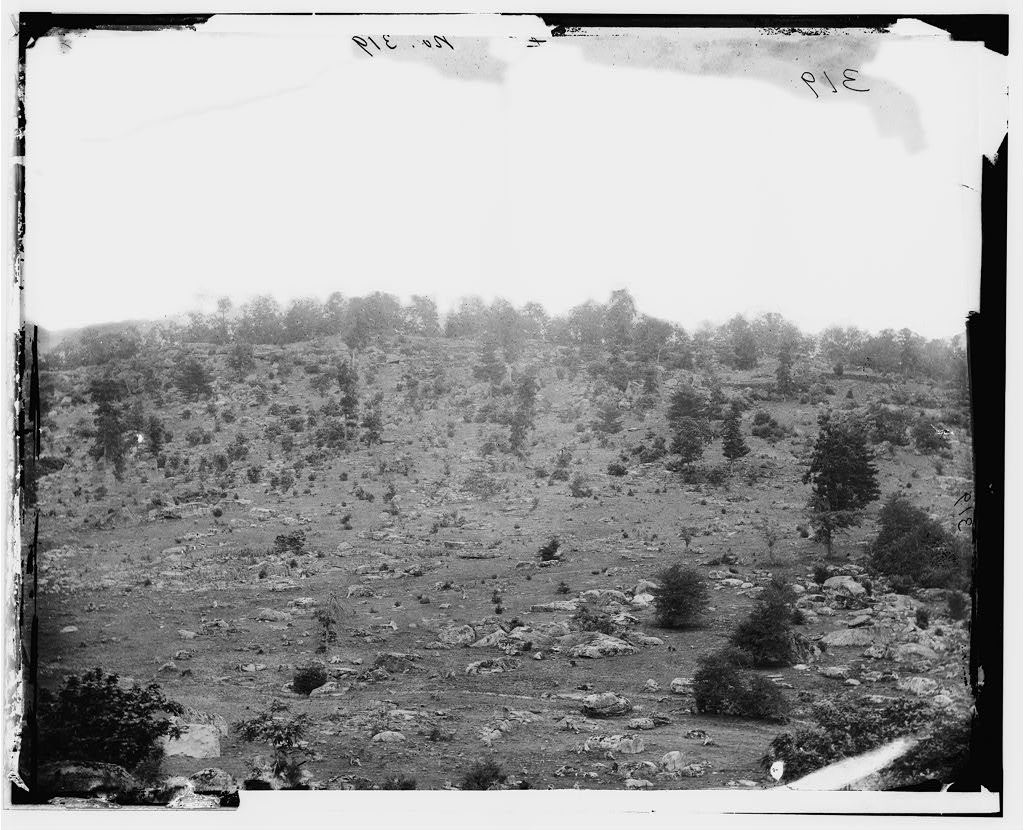
July 2, 2013 Around 4:30 PM on July 2, 2013, my covivant and I were approaching what thought might be the high point of our Gettysburg experience, well my experience...
Gettysburg Day 2 – Worst Ground I Ever Seen
We had a rather free-ranging conversation over many topics including my trip to Dublin where I noted that none of the public contact people were Irish. Mr. Mullally told me that during the Celtic Tiger period, they had to recruit planners from South Africa. There was an interesting interlude in which CV was quizzing Mr. Mullally about the Irish immigrant experience in America. That was kind of odd since that is my heritage, not his.
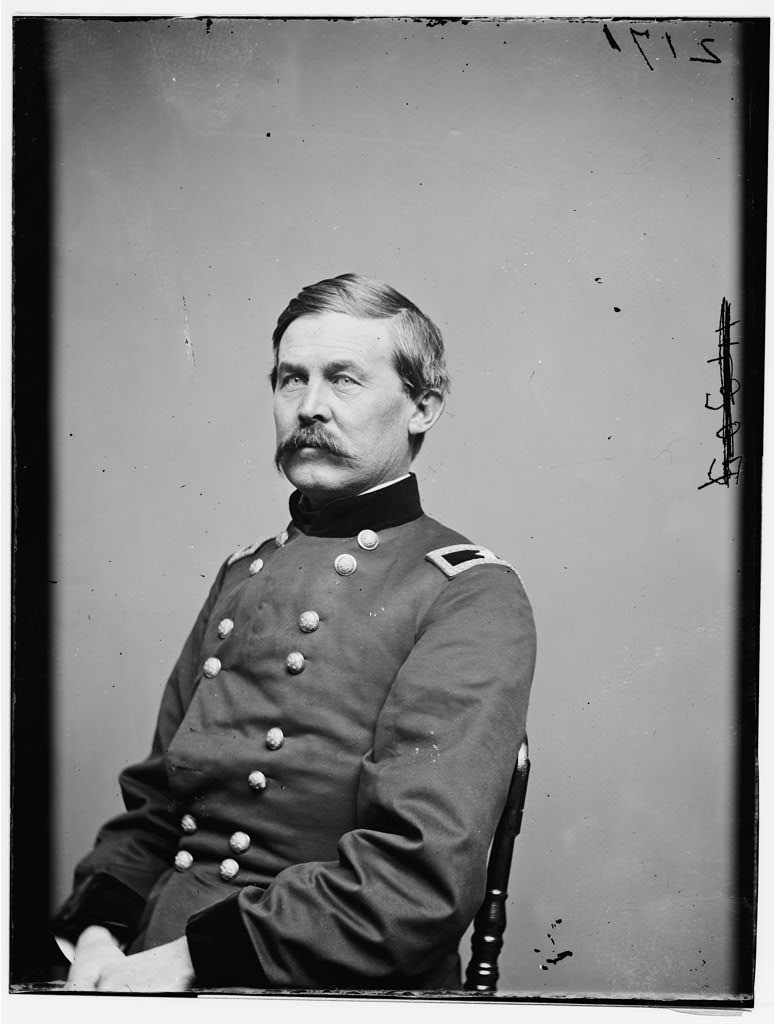
The Irish Brigade had a really bad day in the Wheatfield which changed hands several times. Mr. Mullally and I hunted out some regimental markers, which General Buford had told me to be on the look-out for.
CV and I ate the rations we had carried as we were in line for the shuttle bus for our trip to Little Round Top. CV thought we had done enough walking by then. Little Round Top is my next post.
Gettysburg Day 1- Through The Streets To Cemetery Hill
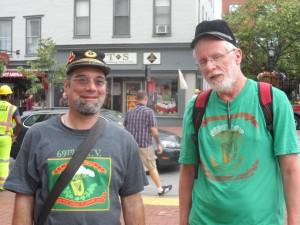
Maybe it is just me, but it seems like if you see someone wearing a T-shirt commemorating a particular unit, it is more than likely an Irish unit. I’ve taken to greeting people wearing them with “Clear the Way” which is a translation of what the Irish Brigade was chanting as they went into battle at Antietam. A fellow, wearing an odd-looking kepi, that I tried it on turned out to be Father Stephen Duncan. Father Duncan told me that he had been reenacting Father William Corby. Father Corby had famously given absolution to the men of the Brigade before they went into action in the Wheatfield on July 2.
Gettysburg Day 1 – Passing Into Legend And History With The Iron Brigade
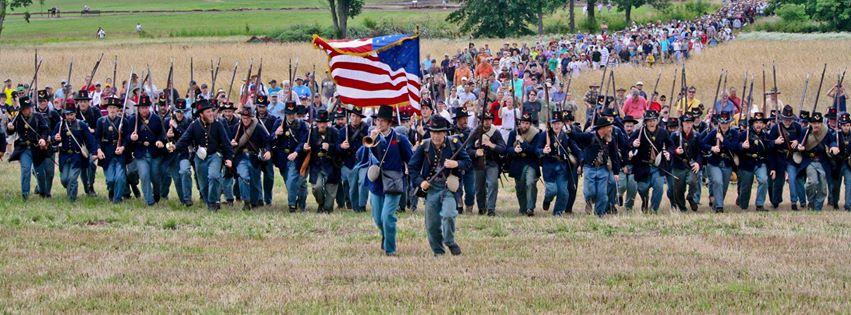
Ironically, our march along Seminary Ridge took us past the primary Confederate monuments. Our first stop was at the North Carolina monument, which is a real work of art. We were ordered – “If you have water, drink it.” I wisely had brought three bottles. The Park historians mainly told us the stories of individual men like Burlington Cunningham, a color bearer in the 19th Indiana. Being a color bearer was a critical and extremely dangerous role, since the colors were what allowed men to orient themselves to their units in the smoke and confusion of battle.
We marched past the Seminary and up onto McPherson’s Ridge, where the Brigade went into action. They needed to hold the ground for as long as possible to allow the rest of the Army of the Potomac to occupy the high ground south of the town. Although the brigade would continue to exist after Gettysburg, the Park historians called this its last march, because it would never be the same as the brigade that started out in the morning. We marched in the footsteps of 1,883 men. At the end of the battle, only 691 would be left.
Gettysburg Day 1 – First Shot – Where Fate Meets History
July 1, 2013 My covivant and I rose early this morning, because I wanted to be there for the first shot. The site of the first shot is the Ephraim Wisler Home on...
Hopes of Our Country Were on Our Bayonets – Gettysburg Day 0
Probably the most fascinating guys at the event were a couple of federal employees. Mitchell Yockelson is an Investigative Archivist for the Office of the Inspector General of the National Archives. The other fellow is a special agent, who preferred to keep a low profile. Apparently there are a lot of documents floating around that really belong in the National Archives and these guys are charged with hunting them down. Maybe that will make another post.