








Most Recent Posts

On The Basis Of Sex: Portrayal Of Opposing Attorney Has Little Basis In Reality
One of the most interesting things I found in talking to Mr. Bozarth is his modesty. He told me that he never mentions the case to anyone. I know that if I were in his shoes I would have included facing Ruth Bader Ginsburg in oral arguments as one of my war stories like the time I – well, never mind.
Stormy Daniels My Top Tax Story Of 2018 – Almost
I started reading Forbes in the eighties and always found it superior to any other business/investment magazine. One of the things I would explain to young accounting staff is that clients will expect them to be well informed on business and investment issues and I always recommended a Forbes subscription as an aid in that process. And I will match our tax team against the New York Times any day of the week. It sometimes amazes me that I have found a place on this platform. It amazes some readers too, but that is another story.
On The Basis Of Sex: How A Tax Case Became A Victory For Gender Equity
Originally published on Forbes.com. People who make lists of the best legal dramas like this one by the ABA and this one by IMDB will need to be doing some updating...
“On The Basis Of Sex” – What To Read Before You Watch
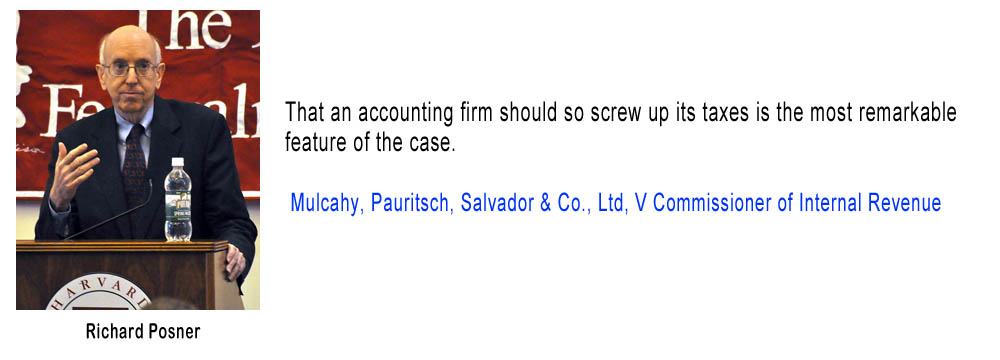
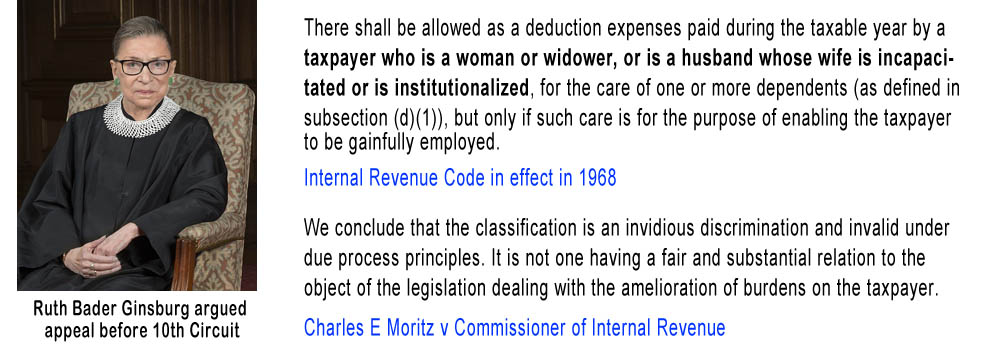
I haven’t seen the movie yet, but I have read the decisions (There was an appeal, which is where the Ginsburgs came in). The decision is Charles E. Moritz v. Commissioner of Internal Revenue, which was decided by Judge Norman O. Tietjens in 1970 in favor of the IRS. Mr. Moritz had represented himself – not surprisingly given the low stakes. The decision was appealed to the Tenth Circuit where Mr. Moritz was represented by Ruth Bader Ginsburg and Martin Ginsburg backed up by Melvin Wulf of the ACLU and Weil, Gotshal & Manges. The lead attorney for the United States was James Bozarth played by Jack Reynor. Sam Waterston, who has played a lawyer on TV more than once, portrays Solicitor General Erwin Griswold.
Pass-Through Deduction (199A) Will Fuel Wealth Inequality
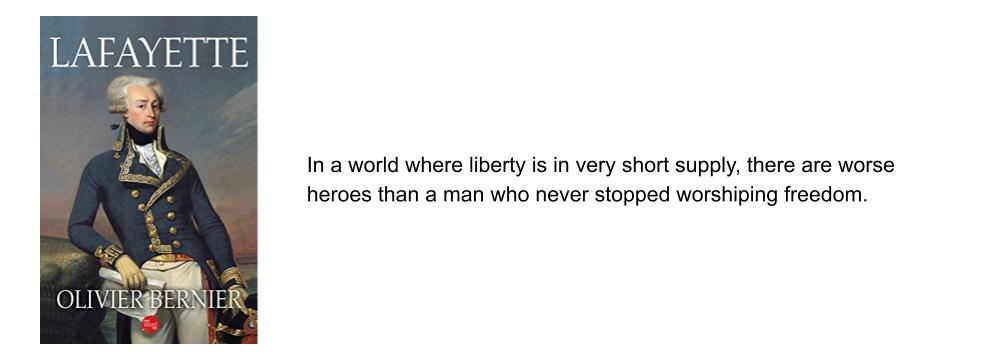
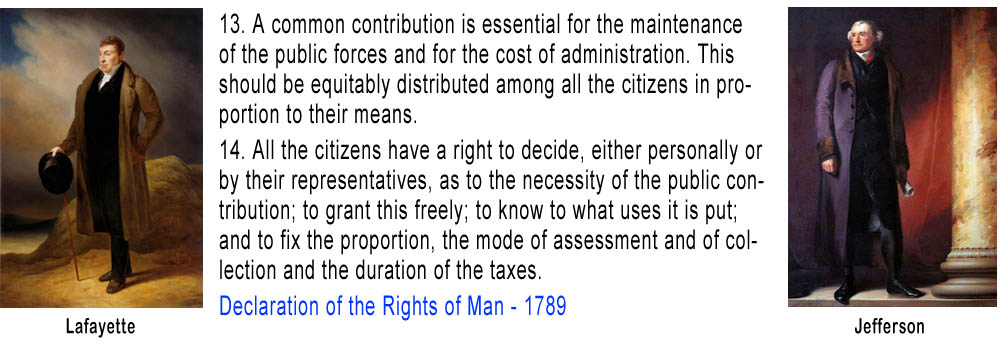
This really smacks quite a bit of the situation in France that led up to their Revolution that came not long after ours was completed with quite a bit of help from France. In pre-Revolution France the aristocrats, the inheritors. were exempt from taxation. And what did the Founders of our country have to say about that? Well, maybe most of them who were busy with the Constitution didn’t have a lot to say about it, but two of them did. Thomas Jefferson and Lafayette had a hand in writing the Declaration of the Rights of Man and of the Citizen which includes.
Article XIII – For the maintenance of the public force and for the expenditures of administration, a common contribution is indispensable; it must be equally distributed to all the citizens, according to their ability to pay.
Crackdown On Conservation Easement Syndications
I got an off the record comment from a businessman who had recently been looking into investing in one of these deals (from a different promoter) and decided to pass. He told me “There was not a single person who I spoke to who understood what they were who thought they should exist …” I have to say that before this announcement I would have told somebody who asked me about investing in one of those things, that I didn’t think they should work, but there is a good chance that they would. At least for the moment, more seems to be right with the world.
IRS And Marijuana – Reefer Madness – Tax Court Harborside Decision
Harborside was a C corporation owned by DeAngelo and his partner, but during the years under consideration, it had to operate on a non-profit basis. In 2018, California law became more liberal allowing among other things Mr. Wykowski to become the first person to buy a non-medical gram legally in California and for Harborside to go public. That’s now, but of course, the Tax Court decision was about then. To comply with the not for profit requirement, Harborside used any profits to provide additional services to the patients.
Tax Cut Bonanza For Retailers And Wholesalers
f the aggressive attitude toward inventory sticks and you combine it with other relaxations in allowable accounting methods (most importantly cash basis) and the unlimited expensing of most capital assets, businesses under $25 million of receipts (that’s indexed for inflation) and their owners and lenders will no longer be taxed on income. They will be taxed, in effect, on what is called free cash flow.
A common measure is to take the earnings before interest and taxes multiplied by (1 − tax rate), add depreciation and amortization, and then subtract changes in working capital and capital expenditure
I can’t rule out the notion that this might not be such a bad idea. Certainly, free cash flow is a measure that is highly correlated with ability to pay. On the other hand, a system like that seems destined to fuel wealth inequality and also encourage gaming. If Mr. Potter is having a better year than he had planned, he can have his suppliers transfer title to goods that have not shipped. There will be a real incentive for channel stuffing, particularly from suppliers that are public companies more interested in earnings growth and less tax-sensitive.
Law Professor Argues New Pass-Through Rules (199A) Are Horrible
The successful job creators are pretty rare and a lot of them are very tax-sensitive. So 199A has created a strong incentive to create your own job. If you do, you can be making pretty good money (over $300,000 with a low earning spouse)and getting the 20% benefit regardless of what you do and whether you employ anybody. If you are making really good money, though, you have a strong incentive to have W-2 employees, as opposed to a bunch of gigsters.
The professions where the partnership form is common and most of the business owners are actually people just practicing the craft exclude the big earners from the benefit.
It may well be that most of the benefit is going to the children and grandchildren of yesterday’s jobs creators – the new gentry. The original version of the tax bill in the House was custom designed for the new gentry. What ultimately passed benefitted a much broader class of people whose income is not from W-2 employment or simple investment – the job creators, their progeny and working stiffs who make their own jobs.
The Thinking Behind The Tax Cuts And Jobs Act – Assuming There Was Some
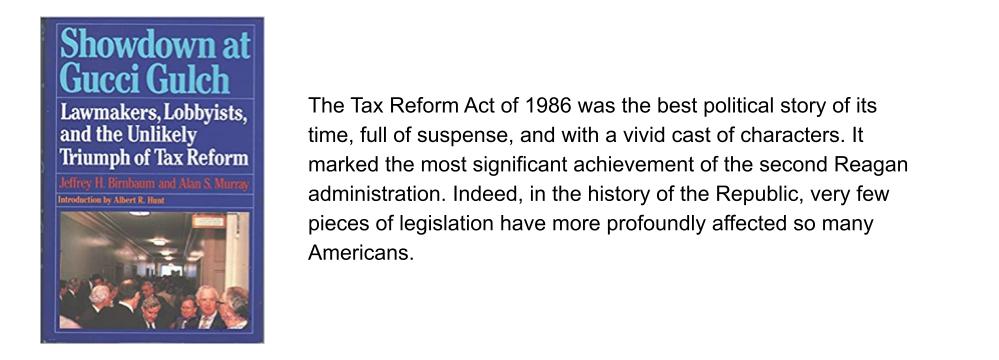
I spoke with Professor Sugin about her article. One thing that we both seem to agree on is that TCJA is not well thought out tax reform as was the Tax Reform Act of 1986. I asked her if this type of deep thinking about the tax law comes across in her teaching. What she told me was that the law school classes will give students a sense of the arc of themes that run through the law and holistic views of the statutes, which will inform students when they get into the details of practice.
The other thing I learned from our discussion which I probably should have known about is what the economists call the “optimal tax model”, which is kind of the holy grail of economic thinking about taxes – designing a tax system that minimizes “deadweight loss” from the economic distortions that taxes create. For example, taxes on labor encourage leisure – at least if you are using “homo econimicus” as your model of human behavior.