


































Most Recent Posts
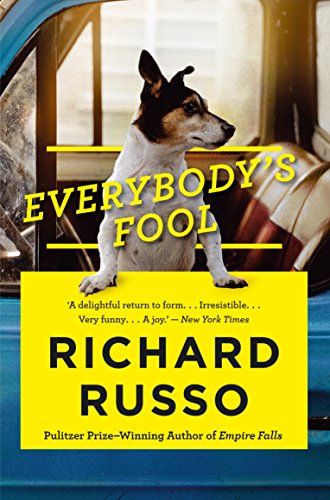
Anachronism In Richard Russo’s Everybody’s Fool?
It is hard to believe that I could catch an otherwise unremarked anachronism in a novel by a major novelist that was published by Alfred Knopf. Well maybe it's just...

Transgender Comic Julia Scotti Blows The Doors Off Fairview Famous
It takes a Jersey girl, or in this case, a transgender woman, to not only have the bravery to come out on national television, but to drop the F-bomb as well!...

Remembrance Of Things Past – St. Johns Fairview Class Of 1966
I have to admit that I am a bit pleased with myself for having pulled off a fiftieth reunion for my grammar school class - St. John the Baptist of Fairview NJ Class of...

Has Kent Hovind Really Handed The Keys To Creation Science Evangelism Ministries?
If you wanted to give credit to one person for Kent Hovind being a free man today, that person would probably be Don Camacho, foreman of the jury in Kent's trial last...
Hovind Ministries In URL Tug Of War
During the run-up to his trial last year one of the things that was remarked about Kent Hovind was that he was not getting a lot of support in Pensacola. Well now that...

F. Lee Bailey Bankruptcy Rooted In Poor Record Keeping
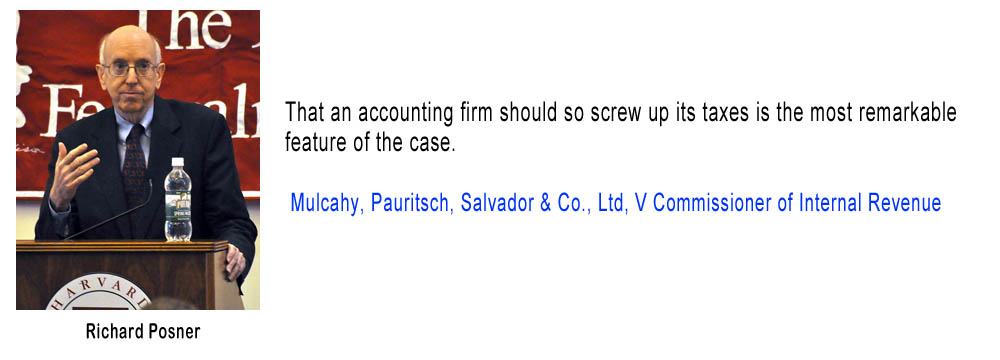
From the Tax Court decision, I think that might be both true and untrue. The DuBoc debacle is probably why Bailey faced such a big audit covering the years 1993 through 2001. If Bailey had had good accounting done, there would not have been all that much to find, though. There were a host of problems with omitted income and unsubstantiated deductions that have more of the hallmarks of inattention rather than trying to get away with anything.
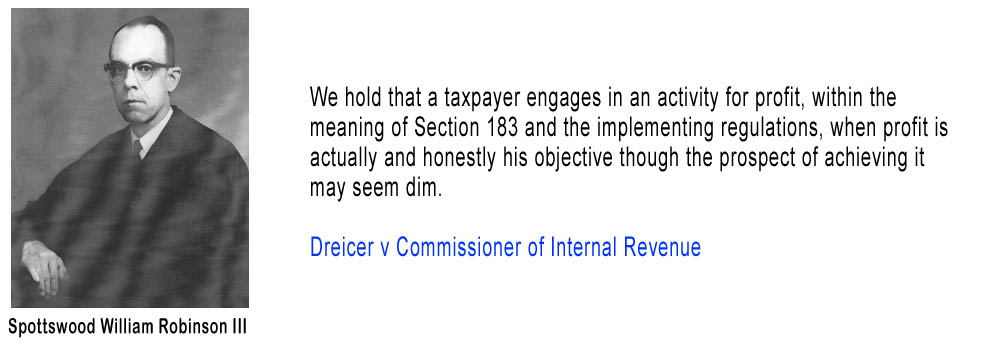
Tax Court Denies Amway Losses Due To Lack Of Profit Motive
The Tax Court denied the losses because Mr. Hess did not have any sort of a business plan. What he received from Worldwide Group “did not contain information that is generally found in a formal business plan”. It was more of a description of how revenue could grow.
It is interesting to note that the Tax Court has become a little more relaxed in calling for formal business plans in Section 183 cases recognizing that people in essentially crap shoot businesses like art and horse breeding don’t need accountants to tell them how to make money. Yet it seems to be holding the line when it comes to Amway.
Donor-Advised Funds: The Good, The Bad And The Ugly
When I spoke with Professor Madoff, she did not dispute that there were positive aspects to donor advised funds, but the focus of the article is on the downside. It is something that would never have occurred to me. Private foundations are required to make distributions every year, but there is no such requirement for donor advised funds. So apparently a lot of people are, in effect, advising the sponsors to just sit on their assets.
Deep Discount From Asset Values In Family Limited Partnership Valuation
The Ninth Circuit has directed us to revise our valuation of the 41% limited-partner interest. The first revision we make is to change the weight we accorded the value of the partnership’s assets. In our first opinion, we assigned a 25% weight to this value and a 75% weight to the present value of the cashflows from the continued operation of the partnership. The Ninth Circuit has instructed us to “recalculate the value of the Estate based on the partnership’s value as a going concern.” In our view, the going-concern value is the present value of the cashflows the partnership would receive if it were to continue its operations. Therefore, we implement the Ninth Circuit’s instruction by changing the weight we accord the present value of cashflows from 75% to 100%. This causes our adjusted valuation of the 41% limited-partner interest to be entirely based on the partnership’s value as a “going concern”.
Form 1099-R From Insurance Company Can Be Bad Tax News
For the next decade, everything seemed fine, but a grim mathematical truth was grinding away. Both the cash surrender value of the policy and the loan balance were increasing. And, since Monarch is presumably in business to make money, the rate on that the loan balance was higher than the rate by which the cash value was going up. Eventually the loan balance is bound to catch up. So in 2011, Mr. Mallory needed to make a payment of $26,061.67 in order to keep the policy in force. He didn’t make the payment. So that was the end of the of policy which was eaten by the loan.
Now if all that meant was that Mr. Mallory finally paid tax on the $46,300 that he had drawn out over and above his premium, that would have been painful, but really not so bad. That is not the way it works though. The policy loan which liquidated the policy includes all the accumulated interest giving Mr. Mallory proceeds of $237,897.25 which works out to a taxable amount of $150,397.25 yielding a tax of $40,846. That would be 88% of the the $46,300. Even Bernie Sanders doesn’t want people to be paying that much.