Here is a guest post from Robert Baty on an employment discrimination case against Liberty University. He connects it with the long struggle against the parsonage exclusion that he triggered. I explained it in this piece – A Christian Not An Atheist Sparked Lawsuit On Clergy Tax-Free Housing Allowances. – PJR
——————————————————————————————————————————————————————————
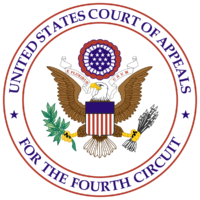
On March 17, 2026, the U.S. Court of Appeals for the Fourth Circuit heard oral arguments in Zinski v. Liberty University. It may be a while before the Court issues its ruling. The issue before the Court is whether or not Zinski’s case should be dismissed. One way or the other, sooner or later, the case might be ripe for U.S. Supreme Court review of the motion to dismiss and/or on the merits of the case.
Zinski’s employment was terminated by Liberty University.
Zinski thought it was a matter of unallowable discrimination.
The federal suit followed.
Liberty University moved to have the case dismissed because, being a religious institution (an issue not in dispute in the case), it is allowed to discriminate and the Government has no business being involved in the particulars of any dispute regarding termination of Zinski’s employment.
The U.S. District Court disagreed with Liberty University and an appeal was taken on the issue as to the motion to dismiss.
There are a lot of similar cases in the record, but maybe not so many precedents for the Fourth Circuit to try and follow. Among other things, the Fourth Circuit asked the various parties now involved in the case about current cases pending on appeal or before the U.S. Supreme Court.
There is legal precedent for ruling the Government has no business entangling itself in religious disputes such as may arise between religious employers and their employees (“ministers”).
Was Zinski one of those employees Liberty University was allowed to discriminate against?
Maybe.
Maybe not.
The Fourth Circuit no doubt will contribute to the lawyerly verbosity regarding the law and undisputed facts in this case.
Will the Fourth Circuit draw a line somewhere between Liberty University and Zinski’s employment over which Liberty University is not allowed to pass without incurring substantial civil liabilities (Zinski is asking for a lot of money)?
Will the Fourth Circuit conclude Zinski was in a “ministerial” position and subject to allowable discrimination by Liberty University?
I figure it could go either way and the decision may smack more of politics than law. All things considered, I might speculate it is more likely that the Fourth Circuit will support dismissal and remand the case for such an order.
To me, this is another in a long line of cases that involve issues surrounding the I.R.S. Issuance of Revenue Ruling 70-549, in 1970, when President Nixon ruled over the I.R.S. There, a private school in Texas, having tax problems, called in its political friends and got off the hook via Revenue Ruling 70-549. That ruling allowed employees at private schools run by religious folks to claim the income tax free “ministerial” housing allowance. The only catch was the Government would recognize such private schools as equivalent to the church. Turned out that wasn’t the only catch, however. That thinking was evolving before 1970 and has come a long way since. Now we are seeing it manifested in the employment cases like Zinski, Byers (Florida College), and O’Keefe (Oklahoma Christian) where the private school is able to invoke its immunity as a religious institution and avoid having cases otherwise decided on their merits.
I don’t agree that’s the way it should be.
But that does seem to be the way it is.
Liberty University, I guess, is about as big as they come.
I think the record indicates it has 12,000 or so employees worldwide.
Are they too big to fail in this case?
Maybe so.
Stay tuned!
——————————————————————————————————————————————————-

For great value in continuing professional education check out the Boston Tax Institute.
If you would like to do business with Your Tax Matters Partner email yourtaxmatterspartner@gmail.com.
A recurring theme noticed in Liberty’s discussion of the case is that Zinski’s history with Liberty University was a “set-up”. The more I read, the more I think that might well be the case, though I do not know how that might effect the legal outcome of the present case.
Some reports indicate Zinski has abandoned the U.S. for foreign destinations because Zinski fears something or ‘nother if remaining in the U.S. That might be a convenient cover story for Zinski’s long-term interests.
Zinski also appears to have had some history in some marijuana/hemp businesses. I didn’t see anyone talking about that. I don’t know what became of those businesses.
I can the activists continuing to try and champion the case, but I am thinking Zinski already sees the “handwriting on the wall” and that there is no big payday coming.
I can even see the activists abandoning the case if the 4th Circuit Court of Appeals remands the case for dismissal, if Zinski is not going to continue to play the part of a serious plaintiff desiring to “take it all the way to the U.S. Supreme Court”.
Zinski simply may not be up for what awaits if it looks like continuing to “fight” might draw more unwanted attention and further reveal the whole thing was planned (regardless of how such planning might impact the results).
.