


































If you have a money-losing side activity, you might consider the tax savings as easing the pain a little bit. According to some of the Amway critics, like Anna Banana, Amway IBO’s are encouraged to view income tax refunds as income from their activity. You should also be aware that if you have persistent losses, there is a decent chance that the IRS will challenge your losses. There are a number of avenues where you will be attacked including substantiation, Section 183 (hobby loss rules), and the passive activity loss rules. Taxpayers and the IRS have mixed results in these cases. Horse breeders frequently win. Amway people almost always lose. Win or lose, though, it is just about the taxes and interest and penalties. Until you get to a case like that of Benjamin O. Agbaniyaka, whose loss in Tax Court in 2007 concerned, inter alia, his African arts and crafts sideline. Mr. Agbaniyaka’s loss in Tax Court prompted his employer to fire him. The Appeals Court for the Federal Circuit upheld the decision.
How do you lose your day job over an audit of your tax reporting of a side job? Mr. Agbainyaka worked for the IRS as a Revenue Agent. The IRS Restructuring and Reform Act of 1998 mandates termination of any IRS employee found to have willfully understated his federal tax liability, unless such understatement is due to reasonable cause and not willful neglect. The agency determined that Mr. Agbaniyaka had willfully understated his tax obligation for the four-year period and, in the alternative, found that he had violated the agency’s code of ethics. He sought arbitration under the collective bargaining agreement with the National Treasury Employees Union. The arbitrator ruled:
Given the Grievant’s experience and expertise, he was undoubtedly aware that he had to substantiate his efforts to conduct a business in 2001 and beyond. Being an experienced and knowledgeable Agency employee, he had to have been aware that he could not substantiate his alleged business activities. By claiming deductions on Schedule C, he knowingly and willfully submitted tax filing to which he was not entitled.
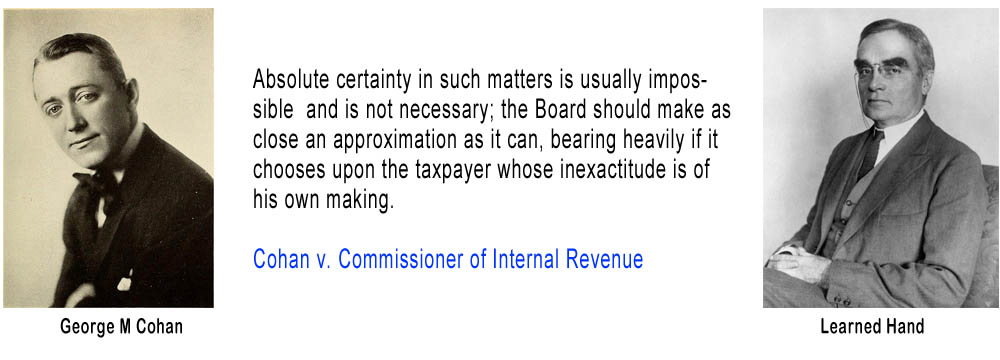
He appealed to the Merit Systems Protection Board, which agreed with the arbitrator. The Circuit Court decision pretty much focuses on what I call “lawyerly” stuff about procedures and burden of proof and the like. Ultimately they upheld the MSPB decision. I am of two minds about this decision overall. On the one hand, I think it is reasonable to hold IRS employees, particularly revenue agents, to a high standard with respect to their own tax compliance. On the other hand, I think the result is on the harsh side. The total deficiency for four years was only around $10,000. It was conceivable that the Tax Court could have believed Mr. Agbaniyaka’s sincerity, in which case some of the deductions might have been allowed under the Cohan rule. Under the statute, the alternative to having him fired, was for the IRS Commissioner to craft some other sanction. Maybe they could have just made him work Amway cases for a couple of years. That would have been punishment enough.
You can follow me on twitter @peterreillycpa.