










































Image by Grok
The Eleventh Circuit opinion in Filipowski v. Commissioner is one of those stories where the story behind the story is a lot more interesting, although the story itself is not without interest. The appeal is of a tax court ruling that blessed an IRS determination to continue with levies despite Filipowski’s $1.5 million offer in compromise on a $140,000,000 liability which IRS refused to accept. You might call it pennies on the dollar, but it isn’t even that much. Eleventh Circuit agreed with the Tax Court.
The Story Behind The Story
I think of Andrew Filipowski as a sort for first-generation tech-bro. Born in 1950, he is half a decade older than Bill Gates. His biggest claim to fame is founding Platinum Technologies Inc in 1987. It focused on systems of database management software, data warehousing, consulting services, and related tools. In 1999 Platinum was acquired by its competitor Computer Associates International for $3.5 billion which was a record-breaking price for the sale of a software company. Filipowski has continued to be a figure in the software industry, although reports about him have slowed down in recent years. Here he is in 2018 speaking at the North American Bitcoin Conference.
Mr. Filipowski has been involved in numerous entities since 1999, but nothing has performed like Platinum. Other newsy thing about him were part ownership of a minor league baseball team and his ex-wife suing another woman (I guess you might say THE other woman) for alienation of affections, which can still yield a money judgement in North Carolina.
It happens that the Platinum sale is at the heart of Filipowski’s current woes. Selling a software company for a record price in 1999 is a beautiful piece of timing. There was this thing idea that we had – a “New Economy” where traditional measures of value, like earnings per share, were no longer relevant. In 1996 Alan Greenspan was talking about “irrational exuberance”, In a 1998 speech Greenspan warned:
“Hence, as the first cut at the question “Is there a new economy?” the answer in a more profound sense is no. As in the past, our advanced economy is primarily driven by how human psychology molds the value system that drives a competitive market economy. And that process is inextricably linked to human nature, which appears essentially immutable and, thus, anchors the future to the past.”
Human nature started catching up with the New Economy on March 10, 2000 when the Nasdaq composite peaked at 5,048.62. It would hit bottom on October 9, 2002 at 1,114.21. Nasdaq would not close above 5,048 until April 23, 2015. In retrospect, the New Economy is known as the dot-com bubble.
Filipowski also participated in the slide. He founded Divine Interventures (later Divine Inc) in 1999. Divine aimed to build a network of internet related companies. Its IPO on July 10, 2000 was disappointing and things did not get better after that. It went into bankruptcy on February 25, 2003 having burned through a billion dollars.
The Shelter
Another piece of bad timing that Filipowski engaged in was how he dealt with his personal tax liability from his share of the Platinum deal. 1999 was also the peak of the tax shelter boom. Major law firms and accounting firms financially engineered investment transactions that artificially inflated basis in assets.
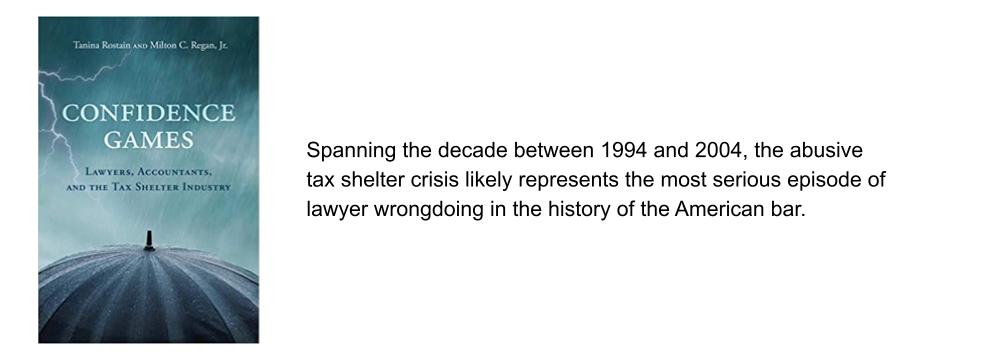
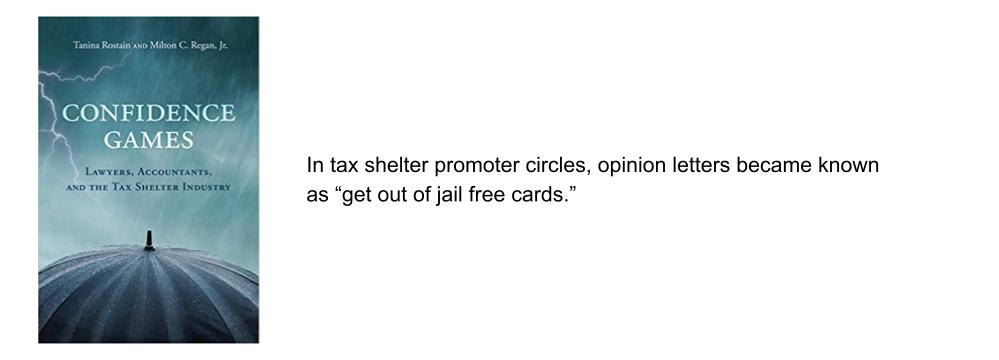
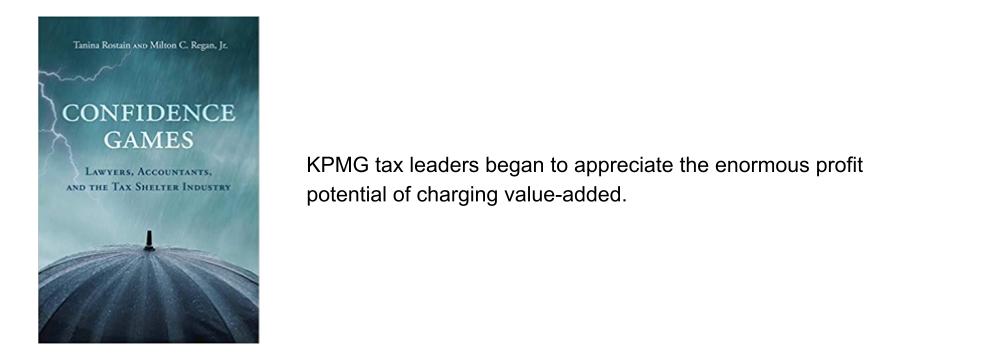
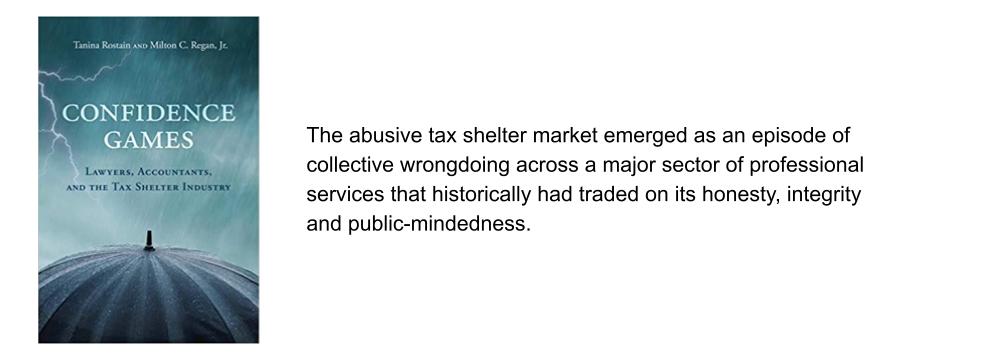
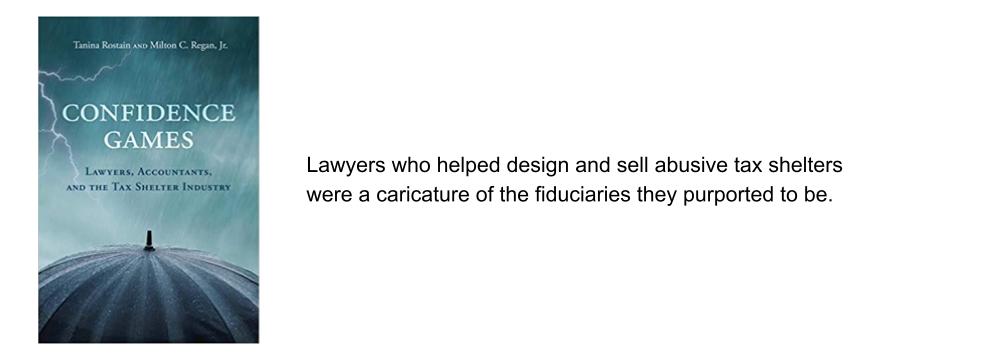
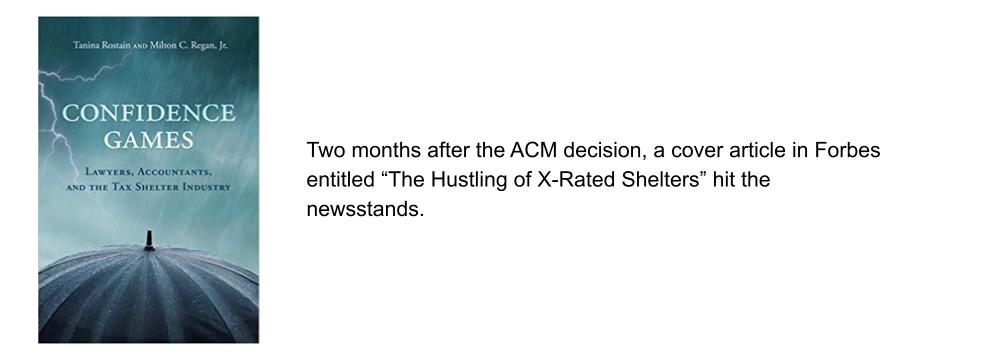
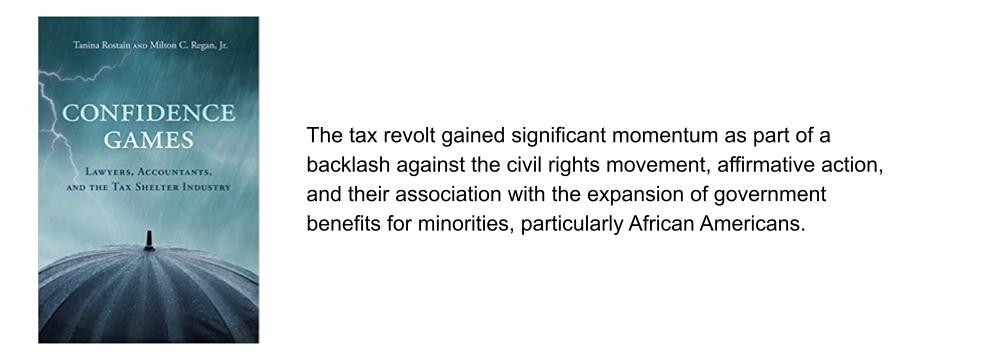
One of the top promoters highlighted in the book Confidence Games was KPMG, which audited Platinum. They introduced him to Paul Daugerdas of Jenkens & Gilchirst. Daugerdas is considered one of the top architects of the tax shelter debacle. Daugerdas was released from prison in 2024 and is facing hundreds of millions of dollars in restitution. Ultimately Filipowski went with a BDO Seidman transaction. Robert Greisman of BDO had heard about the Platinum transaction and asked a friend to introduce him to Filipowski. They ended up negotiating a price of 3.5% of the $120,000,000 of deductions that he was buying. In 2014, Greisman who cooperated with authorities when it all fell apart, was sentenced to three months in federal prison, three years of supervised release and restitution.
I once spoke to somebody who had been an audit partner at BDO Seidman. He told me that whenever there was a whiff of a “liquidity event”, he needed to call in the Tax Solutions Group. If the lead panned out he got a substantial check fedexed to him. Reminded me of the furniture company we did that provided its salespeople with spiffs. I asked him if he ever worried about the whole thing causing serious trouble. He showed he had a similar background to mine by crossing himself.
What is identified as the inflection point in the tax shelter wave was the IRS issuance of Notice 2000-44 on August 11, 2000. It made deals like the one engineered for Filipowski “listed transactions” which among other things greatly raised the possibility of audit. This would have been right around the time the 1999 return was being filed. Talk about bad timing.
The step by step details of the shelter are explained in New Millennium Trading LLC T.C. Memo. 2017-9. Judge Goeke concluded
“NMT was created solely for tax avoidance purposes, and, for that reason, we do not recognize it as an entity for Federal tax purposes. Since it is not a tax-recognized entity, it is ineligible to be classified as a partnership for Federal tax purposes.”
IRS adjustments to the NMT return which wiped out all of Filipowski’s shelter were sustained.
Collection
A supplemental appendix to the government’s filing in the Eleventh Circuit appeal lays out the IRS action to collect the tax deficiency and responses of Filipowski’s representatives. It runs 272 pages. The thing you have to keep in mind is that the deficiency is about Filipowski’s 1999 return which was timely filed in 2000. The partnership audit stretched on a while. The Tax Court petition for NMT was filed on February 16, 2006. Like many of these cases it dragged through Tax Court. There was a regular Tax Court decision (131 TC 18) in 2008 on the validity of partner level defenses in the partnership proceeding. Trial was held in Atlanta in February 2015. Judge Goeke’s decision disregarding all NMT transactions was entered on April 12, 2017.
That decision allows the IRS to send out a new assessment, $32,388,644 in additional income tax and $12,992,515.20, in penalty on July 18, 2018. The interest goes back to the original due date of the 1999 return. So when there is no payment, to speaks of, when the notice of intent to levy goes out on March 18, 2020, the tab is $127,424,025.37. That results in a request for a collection due process hearing and the submittal of the $1.5 million offer in compromise on May 27, 2021. After much back and forth a notice of determination goes out on March 24, 2023. That puts it back in Tax Court, now under Andrew Filipowski, with a petition filed on April 6, 2023. Judge Carluzzo made pretty quick work of that with an order and decision on December 30, 2024. The Eleventh Circuit likewise moved quickly having the case for less than two years and ruling to affirm the Tax Court on September 2, 2026.
Of course the interest clock is ticking all that time which is why the 11th Circuit was talking about $140,000,000. My back-of-the-envelope is that the interest clock is ticking at about $29,000 per day and thanks to the miracle of daily compounding that will be rising.
The Eleventh Circuit Opinion
If you listened to the oral arguments, you would got a feeling right off the bat that things were not going to go well for Filipowski. In his opening attorney Tom Laser said:
“The U.S. Tax Court committed reversible error in sustaining the Commissioner’s rejection for two reasons. First, the Tax Court overlooked genuinely disputed material facts, or failed to construe facts in Mr. Filipowski’s favor in violation of the summary judgment standard. And second, the Tax Court erred in finding that the Commissioner’s rejection of Mr. Filipowski’s offer was not an abuse of discretion, primarily because the Commissioner’s rejection lacked a sound basis in fact and law and was arbitrary.”
One of the judges chimed in with:
“Okay, let’s talk about that last point first. Again, this is from a very far-out perspective, but it’s just an initial instinctive reaction. The IRS determined, rightly or wrongly, that your client owed a hundred and forty million dollars or so in taxes, right?”
Lazor agreed that that was the approximate number and the judge replied.
“Right, okay, so that’s what the IRS is thinking, a hundred and forty million dollars in taxes. Even in today’s world, that’s a big number. Your client offers to compromise for one point five million. That’s like not in the galaxy. And you, I know you have other legal issues, and we’re gonna take those up one by one, but you seem to say throughout your brief or suggest that the IRS had no choice but to accept a compromise offer for one point five million on a purported one hundred and forty million dollar tax liability. This is not like I’m paying fifty percent or I’m paying twenty five percent or I’m paying thirty three percent. It’s like, I haven’t done the math, but it’s like less than one percent. And you’re saying that there’s an abuse of discretion and there’s no sound basis for the IRS to reject that compromise offer. Tell me why that’s just not wrong. Why can’t the IRS rationally say, we are not accepting one percent on the dollar, less than one percent on the dollar?”
The legal argument boiled down to there being material facts in dispute, so arguably the Tax Court should not have issued summary judgement. However IRS denied the offer in compromise on public policy grounds, that the disputed facts were not material to.
“Though these allegedly disputed facts may speak to whether Filipowski’s RCP was properly calculated and whether the IRS could collect on the $140 million debt, the IRS did not abuse its discretion.”
The most intriguing disputed fact was the “DePasquale Trust”. Thomas Depasquale was a colleague of Filipowski, having been the founder of one of the companies acquired by Platinum. The trust had purchased bank judgements against Filipowski at a very deep discount. Proceeds from entities might go to the trust, but Filipowski was allowed to draw up to $300,000. In the internal discussions in the appendix there is talk of putting a revenue agent on the trust, but it seems that was never followed through. When the levies commence in earnest that might change.
Reflection
I find this whole thing sort of tragic. Tax planning when I was starting out seemed to obsess about converting ordinary income into capital gains. That was the goal of the low-income housing deals I worked on. The Tax Reform Act of 1986 changed that. With the dot.com boom people were getting big paydays with marginal rates much lower and for a while capital gains status not mattering. It seemed like nirvana compared to the seventies but then it turned into they should not have to pay anything at all to the government in exchange for mega fees. And as we see with this case, the fallout is not over.
What is going on here is arguably the greatest illustration of Reilly’s Tenth Law of Tax Planning – Once the tax is more than you can pay it might not matter how much more. The trip to Tax Court and the Eleventh Circuit added millions of dollars in interest to the tab, but that really doesn’t mean anything to Filipowski. He will ultimately pay his reasonable collection potential and may have to make lifestyle adjustments. Spending on legal fees let him push it off.
I predicted recently that the fallout from the current round of syndicated conservation easement cases will out live me and that, God willing, I will be writing about them for the rest of my life. I think this story proves my point.
Other Coverage
Ed Zollars in Current Federal Tax Developments covered the case and has more details on the collection issues.
——————————————————————————————————————————————————————-

For great value in continuing professional education check out the Boston Tax Institute.
If you would like to do business with Your Tax Matters Partner email yourtaxmatterspartner@gmail.com