
































































Christian N. Weiler
United States Tax Court
Carl Barney v Commissioner, which came out at the end of December, is probably getting a little stale, but I am trying to resist interesting opinions going down the memory hole, so here is something on it.
Ayn Rand Disciple
This is one where the story behind the story is probably even more interesting than the tax story itself, which is still a little interesting. Carl B. Barney born in England in 1941 started traveling around the world on limited funds when he was 17. He ended up being broke in Australia where he worked on a farm for four years before immigrating to the United States where he landed in the 1960s with $100.
In 1980, he discovered the philosophy of Ayn Rand and her Objectivist principles. He went into the field of education buying his first college in 1985 and then a bunch more. He advocated for the profit motive in postsecondary education and implemented a philosophy-based management style influenced by thinkers like Aristotle, Ayn Rand, Peter Drucker, and Jack Welch. Over a billion dollars in federal taxpayer funds helped.
High Stakes Case
At any rate Mr. Barney was in Tax Court for pretty high stakes. He was facing a 2012 income deficiency of $31,180,039 and a gross valuation misstatement penalty of $12,472,016. He was seeking a refund of $24,983,256. That makes for stakes over $68 million before considering interest. At issue was a bargain sale charitable contribution of $132,428,708 and issues around gain recognition.
The colleges were legally owned by five S corporations which were owned by the Carl Barney Living Trust (CBLT), a disregarded entity. CBLT effectively sold the S corporations in 2012 to the Center For Excellence in Higher Education (CEHE). This is where the story behind the story becomes more interesting. Consider this article in the New York Times by Patricia Cohen in 2016 – An Ayn Rand Acolyte Selling Students a Self-Made Dream.
“He credits Rand’s brand of antigovernment libertarianism, hard-nosed rationality and unapologetic self-interest with helping him realize his own American dream — an achievement he sells to the students at his schools. But his inspiring story is not without contradictions.
Mr. Barney, who opposes government-backed loans and grants on principle, has made his fortune in a business that is almost wholly dependent on them. His students borrow heavily to pay for their studies in hope of replicating Mr. Barney’s up-by-the-bootstraps success, but often find themselves dropping out and burdened with loans. And while he invokes a rigorous Rand-inspired ethical code of fair dealing, he is in an industry with a history pockmarked by fraud and abuse.”
The Transaction And Returns
In 2012 the five S Corporations were merged into CEHE with Mr. Barney receiving two notes totaling $431 million. In 2015, the notes with a balance of $412,555,000 were written down to $75 million. From the discussion in the opinion this was necessary in order to mollify the Department of Education’s concerns about CEHE being overleveraged.
Each of the five S corporations filed its 2012 (presumably final) return in September 2013. They elected out of the installment method and reported total capital gains of $608,869,455. On the theory that the assets were worth more than the consideration, they reported bargain sale charitable contributions of $180,922,213.
In 2017, each S corporation filed amended returns for 2012 writing down the value of the notes to $72 million. Mr. Barney filed an amended return for 2012 reporting an overpayment of $27,288,372, There were also amended returns for 2013, 2014, 2015.
Initially IRS partially disallowed the proposed refund and proposed a refund of $5,263,147. Since even the lower amount was over $2 million it had to be submitted to the Joint Committee on Taxation for review. After the review the IRS denied the refund and proposed a deficiency of $31,180,039 disallowing the bargain sale charitable contribution and assessed penalties for negligence and valuation misstatement.
The Opinion
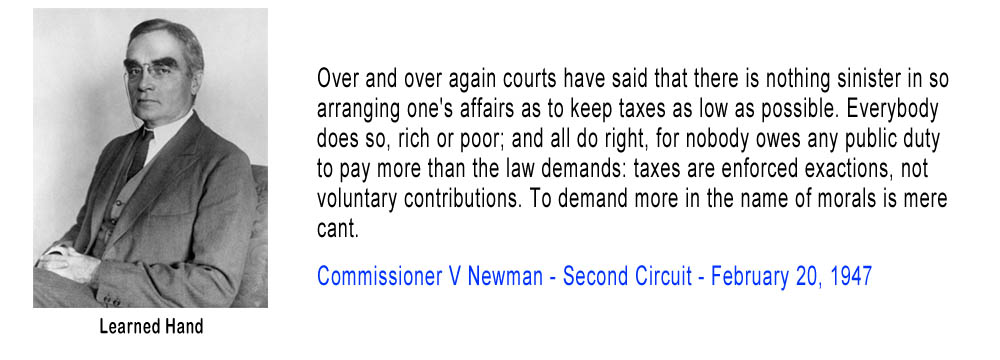
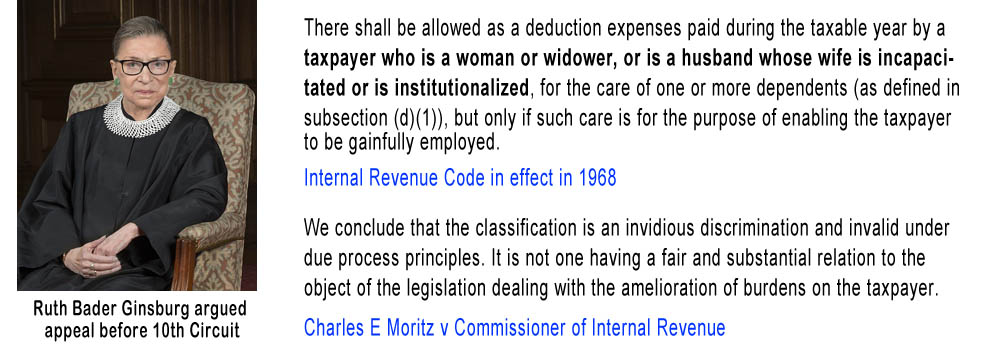
Judge Weiler after reviewing dueling appraisals concluded that the S corporations were worth $300 million, which could have meant no bargain at all, if the consideration hadn’t changed.. The judge also carved back the value of the consideration to $267 million. He also set aside IRS objections to the notion that there was any donation at all.
“We disagree with respondent’s argument that the bargain-sale Transaction lacks “donative intent.” Mr. Barney undoubtedly desired for the Colleges to become nonprofit entities, and he arranged for their transfer to CEHE to achieve this goal. We view Mr. Barney’s role within CEHE as not conclusive of his continued ownership, but rather, as meeting his goals for the Colleges to continue as nonprofit entities, while equally retaining creditor rights.”
Tax Court judges don’t do math, so the judge does not know whether there is a balance due or a refund. Consideration of penalties was deferred. I am resisting the temptation to take a shot at the computation myself.
Reflecting on this the original decision to elect out of the installment seems a little odd, but you have to consider that the charitable deduction is subject to an AGI limitation and expires after five years. If I was more ambitious I would try to run numbers. Violating my rule against doing the math in one’s head, I think it is likely to turn out to be a refund.
Other Coverage
Lew Taishoff has It Was A Bargain Sale.
“It’s only the inflated numbers that keep Carl B. Barney, T. C. Memo. 2025-133, filed 12/30/25, from the entire amount he claimed as a charitable deduction. I’ve been following Carl B.’s hike through Tax Court through four (count ’em, four) blogposts, but, as usual, it all comes down to the valuation joust.”
Ed Zollars of Current Federal Tax Developments has Valuation Wars and Section 170 Substantiation: Analyzing the Barney v. Commissioner Bargain Sale Decision
“The Court ruled in favor of the taxpayer on this procedural issue. While the appraisal relied on unreasonable estimates, the Court could not conclude “that the report, as a whole, is unqualified and lacks substantial compliance with the applicable Treasury regulations.” The Court distinguished this case from others where appraisers omitted easements or permanent restrictions, noting that the “contractual limitations facing CEHE. are ordinary restrictions facing any seller-financed arrangement.””