





























































Most Recent Posts

Clever Techniques To Defer Capital Gains – Maybe Too Clever
This is the technique that is most exciting Using an installment obligation as collateral will generally trigger gain recognition. The Monetized Installment Sale (MIS) purports to work around this allowing you to have the overwhelming bulk of the proceeds available for whatever purpose you want, while still deferring gain.
The support for this technique comes from a 2012 advisory letter from the IRS Chief Counsel Office – 20123401F . It’s important to note that this letter is not a blessing of the transaction. The revenue agent was asking whether the transaction should be attacked with either “substance over form” or “step transaction”. The Associate Chief Counsel told the revenue agent that it should not. So the answer was not that the taxpayers are right, just that they are not wrong in those particular ways.
Cannabis Company Harborside Goes Public – Will Appeal Multi-million $ Tax Court Ruling
The fundamental tax problem of the state-legal cannabis industry is Code Section 280E which denies ordinary and necessary business deductions for taxpayers trafficking in controlled substances. That was added to the Code in 1982.
Because we have an income tax, not a gross receipts tax, deductions still had to be allowed for the cost of goods sold. The Tax Reform Act of 1986 expanded the costs that were included in the cost of goods sold(Code 263A). This was generally not a taxpayer-friendly provision since it had the effect of deferring deductions in inventory.
Having deductions running through the cost of sales was good for the “traffickers” though. It is better to get a deduction later rather than never. In 2015, the IRS Chief Counsel snatched even this half loaf off the table with CCA 201504011.
Wealth Tax – That Pesky Constitution Might Get In The Way
This might be an example of how the non-binary parties (I hate calling them “third” since there are so many of them) end up having influence. I first encountered the wealth tax in the Green Party Platform while preparing to interview Jill Stein in 2012. Doctor Stein thinks it is quite a good idea.

Former DOJ Tax Lawyer Turned Lobbyist Pleads Guilty To Leaving $2.2 Million Off Tax Returns
Most tax preparers I know will tie themselves in knots to avoid documents like 1099s and W-2s not matching what goes on the return. They know from experience that if anything will get caught and cause embarrassing notices, mismatches will. The same care usually goes into K-1s, the forms used by partnerships and other flow-through entities to report income to owners and the IRS.
It turns out, however, that the IRS over the years has had a lot of trouble matching K-1 information to returns as is discussed in some detail in this article in this law review article by Valeriya Avdeev. Miller’s highest paying client was the Affordable Housing Tax Credit Coalition. If you work with housing credits, you learn about partnerships, so Mr. Miller might have been counting on IRS bumbling.

Freedom From Religion Foundation Won’t Take Clergy Housing Case To Supreme Court
Someone make the case that Joe Sixpack has to pay taxes on his income and doesn’t get any exclusion for his singlewide complete with a deck and a mangy dog sleeping under it, while Kenneth and Gloria Copeland live in an 18,280 square-foot lakefront parsonage on 25 acres valued at $6.2 million and exclude hundreds of thousands of dollars from income taxes under the housing allowance, or while Phil Driscoll enjoys not owing federal income taxes on $408,638 provided to him by his ministry to buy a second home on a lake near Cleveland, Tenn.

Deferred Sales Trust – A Tax Plan Or A Product ? A Bit Of Both
There is a veritable army of financial services providers offering DST as an option and explaining why it is such a good thing. They are members of the Estate Planning Team, which developed and implements DST.
If you are interested in joining the team, you can go to Why Join The Estate Planning Team? There are powerpoints with audio explaining the benefits to professionals of various sorts. Here is the one for CPAs and tax professionals. (Uses Flash)
Besides all the great referral business a CPA can get out of DST there is also the allure of a piece of the set-up fee on each transaction and a piece of the money management fee that is part of the whole package.

Want To Know What A Machinegun Is? Look It Up In Internal Revenue Code
The term “machinegun” means any weapon which shoots, is designed to shoot, or can be readily restored to shoot, automatically more than one shot, without manual reloading, by a single function of the trigger. The term shall also include the frame or receiver of any such weapon, any part designed and intended solely and exclusively, or combination of parts designed and intended, for use in converting a weapon into a machinegun, and any combination of parts from which a machinegun can be assembled if such parts are in the possession or under the control of a person.

Horse Breeders V IRS: Even The Losers Win
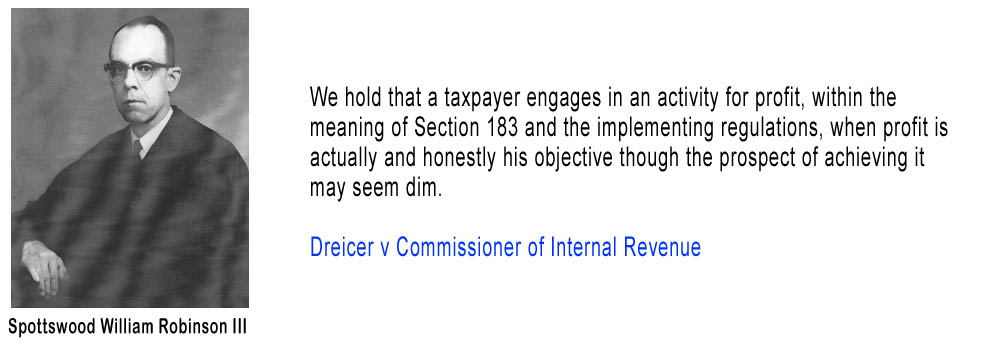
But litigated cases are a bad sample. Most cases settle. Unfortunately, any information on that is anecdotal, unlike the decided cases which are there for all to see. The word on the street is that cases settle for 50% (or sometimes over 80% in favor of the taxpayer) in appeals. And it is back to claiming the losses after that. But the really interesting thing is that in many of the litigated cases where taxpayers lose, they are actually winners if you take a broader view.
S Corporation Might Have Been Better Plan For Writer Karin Slaughter
The S corporation as a vehicle for authors like Slaughter is supercharged by Section 199A which allows a 20% income tax deduction for the flow through income, provided the W-2 is sufficient. Writing is not one of the specified fields like health or performing arts that is excluded from 199A for high-income people.
Assuming she does not have a team of minions writing for her she would need an S corporation so she can pay herself W-2 wages. I discuss the optimal amount here. You would absolutely not want to make the argument that she is getting paid for the brand rather than the writing since that might fall under one of the dreaded SSTB categories that don’t qualify for the deduction. The example in the regs is not a writer, but you should be able to get the ideas.
Tax Season Therapy The Tweets Of Andrea Carr CPA
Do you think it's a coincidence that Girl Scout cookies are sold during tax season? I think not . - Andrea Carr CPA The tweeting of Andrea Carr CPA was one of the high...