


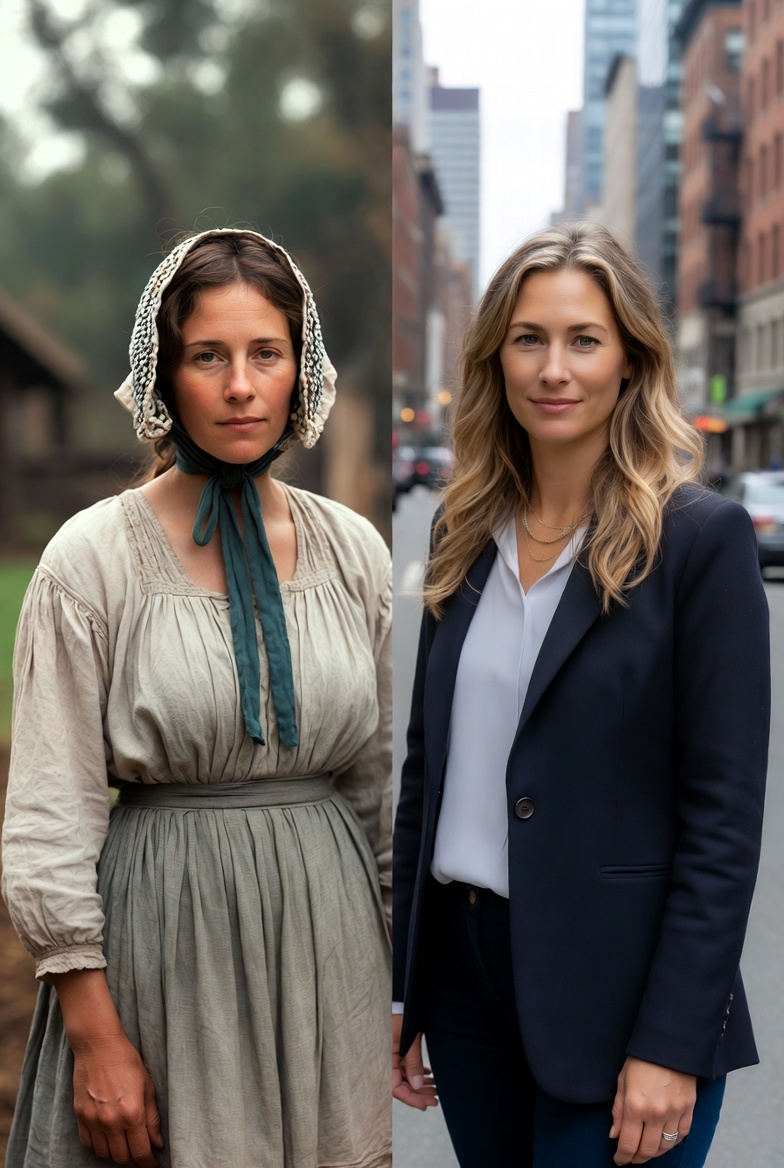
Image by Grok
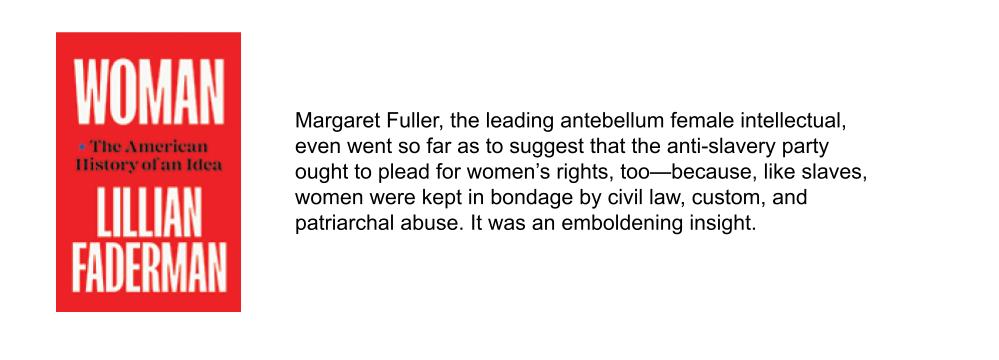
Yesteryear by Caro Claire Burke and Strangers: A Memoir of Marriage by Belle Burden
What I write about on this blog is “stuff I find interesting”. From 2011 to 2025, most of the material here had first appeared on Forbes.com. As time went on they sent contributors a “stay in your lane edict” which caused me to write less about non-tax stuff, than I had. Well, those days are gone. More significantly, my normal go to sources of “stuff I find interesting” in the tax world came up dry in the last month ironically noted for its showers. When that happened early in my writing career, I sometimes thought I would have to give up tax blogging, but now I know this too shall pass. What I did find interesting were two books that I picked up from the New York Times article – The Best Books of the Year (So Far).
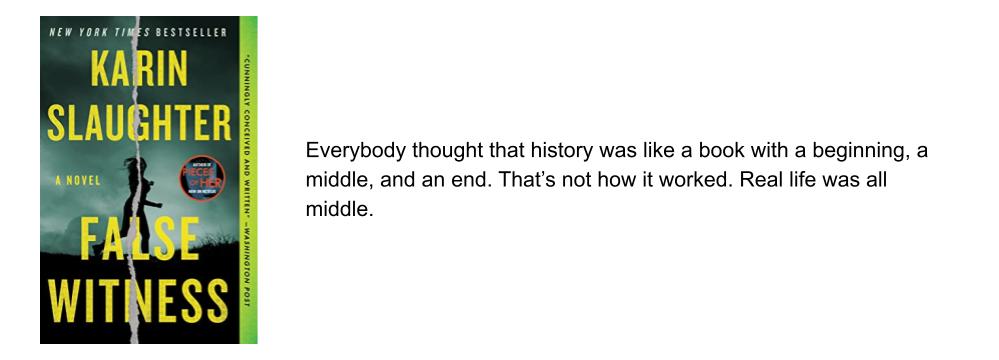
Yesteryear – A time-traveling tradwife thriller?
The novel is almost entirely first person entirely in the head of somebody who is not very likable named Natalie Heller Mills , but as it developed I started rooting for her anyway. Included in the narrative is her mental prayer life which early on gives us part of the picture.
“Thank you for watching over the farm animals, Lord, and thank you for helping us pass five million on Instagram this week. We’re only a few souls away from one million on YouTube, Lord. It’s through Your will, and Your will alone, that I have reached so many hearts and minds. It’s in Your name that I work to spread Your truth.”
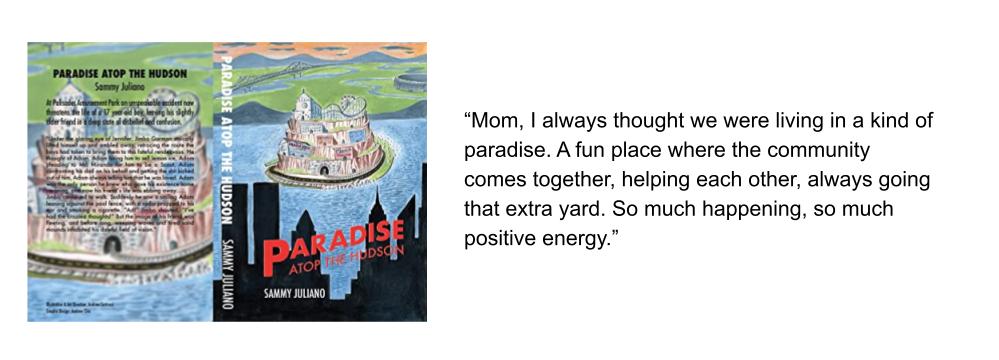
The opening chapter is a picture of her current life as a very successful trad wife influencer living in a farmhouse with her children (another one on the way) and her husband displaying a curated lifestyle on Instagram and YouTube that leaves out the two nannies, farm hands and producer that make it possible. We learn that all is not well in paradise from a resignation email from the producer that touches on assault allegations. That closes Part One The Past, which is a single chapter.
Part Two: The Present, which has 57 chapters, has a really good opening line:
“Was it a day, a week, a month? What I know is this: I wake one morning and think, Jesus fucking Christ, it’s cold. Then: Sorry, Lord. Cussing like some scummy teenager is not the ideal way to start a day. Still: it is cold. Colder than usual.”
It’s so cold, because the house which seems remarkably like her house in layout has no central heating or other modern conveniences. There are four kids who look like they could be her kids, but they are not the kids she left behind in somehow being transported to this strange place. From notches in a door frame recording heights and names she learns that it is 1855. She will before long encounter her then husband who looks remarkably like an older version of her husband, Caleb, so much so that she calls him “old Caleb”. He is not the soft, in many senses, twenty-first century Caleb whom she shaped as she will find when he punishes her escape attempts and when he joins her in bed.
“Ha. It really is funny to think of how I all but begged Caleb, in our early years of marriage, to become the kind of man who is standing before me now. The opposite of a kindergarten teacher. A farmer. A cowboy. A patriarch. A man without a single soft edge. I craved it, I prayed for it, and what did the Lord do? He listened. He gave me what I wanted. He gave me a man.”
What follows was to me a real page-turner as Natalie tries to figure out what is going on while relating to her four nineteenth-century children, particularly the oldest and youngest, both girls. The boys spend most of their time with old Caleb. Mary, the older daughter, has clearly been deputized by old Caleb to be the lady of the house supervising her mother who has gone off track.
The relation of the adventure in 1855 alternates with filling us in on Natalie’s back story. Hard-scrabble youth. Scholarship to Harvard, where her devout Christian background alienates her from her roommate and the crowed. Meeting Caleb, also attending Harvard, at a church service. Caleb’s family with a rich patriarch with plausible presidential aspirations. Problems with Caleb’s lack of ambition and his pornography habit and absorption with the online manosphere. She convinces her father-in-law to finance a farm where they can live a traditional lifestyle.
“Want to blow through five million dollars so quickly it makes your head spin? Buy a fucking farm.”
Then Caleb comes to her excitedly as one of the manosphere YouTubers has taken notice of Natalie’s Instagram and given her follower count an enormous boost making her a star of sorts. That will ultimately lead to the crisis that we open with.
The parallel story of 1855 Natalie and Old Caleb and the other children is the really fascinating one. I didn’t guess the resolution and won’t give you any spoilers. The resolution of it all does share something with some of my favorite time travel stories. That is that maybe the present world isn’t all that bad.
“For what it is worth: I do not recommend giving birth in the pioneer days.”
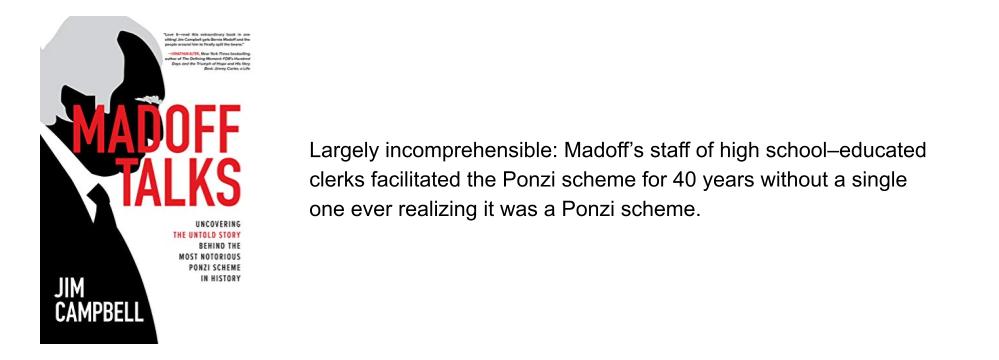
Strangers – A COVID divorce painted on a large landscape
One of the first things I do when I decide I might be buying a book is to read the one-star reviews on Amazon. They frequently reinforce my notion that the book might be interesting. Here is one from “Book mom”
“- First Life Hardship at 50 years old – A challenging divorce of a couple with uber personal and extended family wealth and endless privilege which the author seems to be completely unaware of. While the vast majority of women raise their children, work and experience financial struggles after divorce, Belle experienced none of it. Trust funds, nannies, husband with multi million compensation and family buying them assets and paying for kids education, one will have a hard time relating to their struggles.”
Well that is right up my alley. From my earliest days in public accounting I was able to see how family wealth worked over generations. I may have been aided by my historic imagination. Going from somebody starting a new business from scratch in the morning to preparing fiduciary income tax returns for trusts that held wealth generated by a business founded in 1910 in the afternoon. And the next day with siblings who had taken over the grandfather’s business from their father and were bringing it to dizzying heights requiring us to be planning trusts for their unborn grandchildren. It added other colors to the green analysis paper and the white calculator tapes.
The genesis of Strangers was a submission to the New York Times Modern Love series Was I Married to a Stranger? by Belle Burden. Burden extended the piece into a full-blown memoir. As I was reading it I was experiencing the story as a low grade drama that still managed to be compelling. She tries to figure out why her husband left her. There is a sort of conclusion on page 215, but I won’t spoil it for you. More interesting is the financial fight.
Both James, as she refers to her husband in the book, and Belle spend time searching through papers in the summer home to find the prenup. Her plan was to burn it. The prenup ends up being a bit of a MacGuffin in the story. Ultimately one of the attorneys finds a copy somewhere. Belle was the beneficiary of multi-generation wealth so it was a given that there be a prenup when she married James. The standard terms were what ever was brought into the marriage stayed with who brought it in. Everything that came in after was split. James objected to any prenup, but when he gave in he argued that keepsies would be anything that was not explicitly put into joint name.
They had met as lawyers at a top firm, but they both left the firm. Belle worked in a start-up of her brother’s that didn’t go anywhere. James worked for an investment firm that had been started by Belle’s uncle and then moved on to a hedge fund where he did really well. Belle paid for both their homes, a condo in TriBeCa and a summer home on Martha’s Vineyard with trust fund distributions, which seemingly did not leave much behind. A gift from Belle’s step-mother, Sandra, added eight acres to the Vineyard property. Both properties are in joint name. Much of the wealth piled up by James while Belle “managed the homes”, as they now say, is in his name. James hires a hard-ball divorce attorney rather than being a mensch. It looks like Belle might end up with a single home worth more than you or I could afford but less than the TriBeCa condo. That one had me on tenterhooks. It is not like this is a novel, but still I won’t spoil it for you.
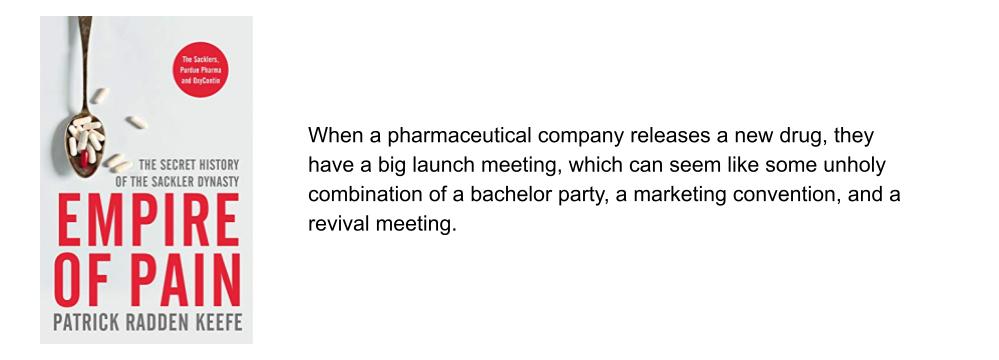
It was very frustrating that there were no numbers. I asked my buddy Grok about it and he told me that there is nothing really that reliable but Reddit scuttlebutt puts the TriBeCa condo at $12-13M and the MV property at $7.5M.
What really made this book fascinating was the social historical context that is painted. Belle Burden does not yet have a wikipedia entry but her parents and grandparents all do. So she grew up not just with wealth but also celebrity connection. I found myself playing generational hopscotch with Belle. Her parents are in the age class of my older siblings, the silent generation. She falls in with my nephews, next gen cousins and most of my partners kids. Gen-X, but darn it she had nothing to say about Oregon Trail in the whole memoir. My two kids are millennials. Her three are Gen-Z. Her grandparents were the same vintage as my parents. I was not actually familiar with all the sort of famous people she is related to, but if I had not given up my subscription to New York Magazine in the early seventies, I would be. The most notable was her grandmother Babe Paley who ended up regretting being a close confidant of Truman Capote.
The account of Belle’s reaction to her fathers death was very moving. It also contained one of the few observations about the details of the overall financial picture. Shirley Carter Burden Jr. died in 1996 at the age of 54. He and Belle’s mother, Amanda Jay Mortimer Burden, had divorced in 1976. Belle was very close with his second wife Susan Lombaer. Besides the shock of his death, there was also a financial shock of $40 million in debt to deal with. The debts were secured by his and Susan’s apartment and their collections. She and her brother worked with Susan to sell her father’s company, Commodore Media.
“The sale allowed us to repay his loans and regain some wealth, in part because of Susan’s status as a widow exempted her from paying capital-gains taxes.
You and I both know that technically it was not Susan’s “status as a widow” that avoided the capital-gains taxes, but I was really starved for any financial details in the story, so I appreciated it. The take-away is that Carter Burden was a successful example of the hold, borrow, die strategy, but we can tell from the memoir that it was pretty stressful for his heirs.
There are two other features of the story that I really appreciated. One is that it brings back the memory of the stress of COVID. James drops the divorce bomb while the family is sheltering out of season on Martha’s Vineyard. The other is a sort of poetic framing device.
“Each spring, an osprey couple returns to the same nest on our property on Martha’s Vineyard. The nest is on the edge of a lake that leads into the Vineyard Sound, facing west. In lucky years, eggs appear in the nest in May, chicks in June. In July, the juvenile ospreys learn to fly. By September, the family is gone, headed to the Caribbean or South America for the winter.”
As I worried about how things were going to work out for Belle and the kids, we got regular reports on how the ospreys were doing.

Image by Grok
—————————————————————————————————————————————————————

For great value in continuing professional education check out the Boston Tax Institute.
If you would like to do business with Your Tax Matters Partner email yourtaxmatterspartner@gmail.com.
.
This is a warm, engaging piece, Peter. It’s the kind of writing that draws you in because it resists staying in its lane, which is exactly the point you made at the outset. The transition from tax blogger to literary reviewer feels entirely natural here, and that’s meant as the biggest compliment.
Your review of “Yesteryear” might be the stronger of the two, and those quoted passages do the heavy lifting beautifully. The line about buying a farm is marvelous, and your instinct to let the book speak through its own prose is sound editorial judgment methinks. The framing of Natalie as someone you root for despite yourself is exactly the kind of tension a good review surfaces without spoiling. You might consider giving just a touch more of your own critical assessment—why the 1855 sections work so well beyond being a “page-turner” — but I saw the restraint is mostly a virtue.
“The Strangers” review is where your distinctive voice really shines. The one-star Amazon review gambit is clever, and your riff on generational wealth from your accounting days adds texture no professional book critic could bring. The generational hopscotch paragraph is delightful, though the aside about the Oregon Trail might lose some readers mid-thought. The financial digression around the capital-gains/widow’s exemption moment is exactly the kind of specialist illumination that justifies a tax blogger covering literary memoir — that’s your added value, and it lands well.
One small note: the osprey passage deserves a sentence of your own reaction rather than just placement. It’s clearly the emotional heart of the Burden memoir, and a little more of Peter’s response to it would be welcome.
Overall, it is genuinely enjoyable. I think it’s fantastic when you go outside the lane.
Thanks.