


































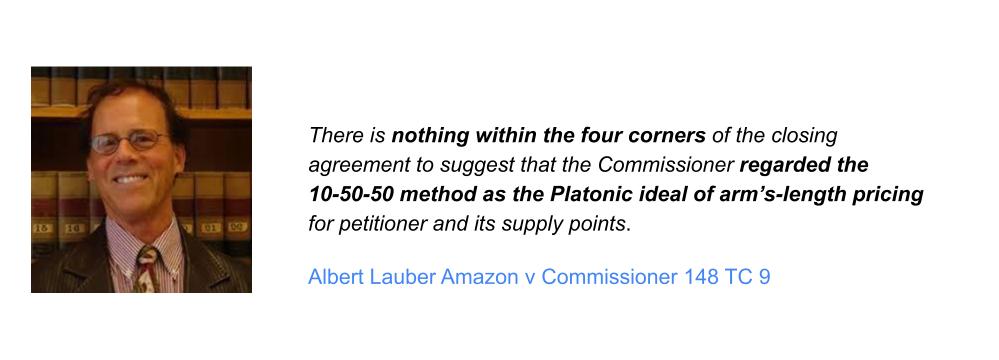
























Michael Smith was in Tax Court representing himself on a deficiency of $5,454 for the year 2022. He filed the petition on January 25, 2025 and Judge Lauber issued the final order in the case on March 27, 2026. That is pretty fast work. Judge Lauber has issued seven other opinions this year so far. The petitions for them were filed between 2013 and 2023. As it turns out it strikes me that the Smith case should not have been in Tax Court at all. I am not sure if the fault lies with the IRS or Mr. Smith or some combination, but since I like to root for the taxpayer, I’ll make the argument for how the IRS should have cut this off.
SSDI
Mr. Smith was ruled disabled by Social Security in 2022. They gave him a nice retroactive lump sum check and started paying him monthly Social Security Disability Insurance (SSDI). Then early in 2023 they noticed that he had had too much other earnings in 2022. He had to pay back everything that he received. According to the facts in the opinion, he had received $26,802 in 2022. He repaid $31,116 on May 26, 2023 and the balance in monthly installments in 2023 and 2024. So we don’t know how much he got in 2023 or what the monthly payment was. That sort of isn’t relevant, but it bugs me because I like to tie everything out when I can. Mr. Smith did not report any social security income on his 2022 return. IRS figured he should have been taxed on $22,782 (85% of $26,802).
Like A Loan?
The IRS moved for summary judgement in the case and Judge Lauber gave it to them after penning a memorandum opinion. Judge Lauber remarks that Mr. Smith thought that the money he received in 2022 was tantamount to a loan.
“We understand why petitioner views his predicament in this way, but this Court is bound by the provisions of the Code.”
Remember Reilly’s First Law of Tax Planning – It is what it is, deal with it.
The next thing that comes makes me feel a little let down by Judge Lauber, although it is really not his fault.
“In effect, petitioner urges that he should be entitled to an offset or loss on account of repayments he made during 2023 and 2024. We are unable to consider the effect of a repayment made in any year other than 2022, the only year over which we have jurisdiction. “
On the bright side, there was no accuracy penalty.
There Is Some Relief
Since Mr. Smith repaid more than $3,000 in 2023, he would be entitled to relief on his 2023 return. The process is described in IRS Publication 915 and cross-referenced in Publication 525.
Deduction exceeds $3,000.
If this deduction is more than $3,000, you should figure your tax two ways.
- Figure your tax for 2025 with the itemized deduction included on Schedule A (Form 1040), line 16.
- Figure your tax for 2025 in the following steps.
- Figure the tax without the itemized deduction included on Schedule A (Form 1040), line 16.
- For each year after 1983 for which part of the negative figure represents a repayment of benefits, refigure your taxable benefits as if your total benefits for the year were reduced by that part of the negative figure. Then, refigure the tax for that year.
- Subtract the total of the refigured tax amounts in (b) from the total of your actual tax amounts.
- Subtract the result in (c) from the result in (a).
Compare the tax figured in methods 1 and 2. Your tax for 2025 is the smaller of the two amounts. If method 1 results in less tax, take the itemized deduction on Schedule A (Form 1040), line 16. If method 2 results in less tax, claim a credit for the amount from step 2c above on Schedule 3 (Form 1040), line 13z. Enter “I.R.C. 1341” on the entry line. If both methods produce the same tax, deduct the repayment on Schedule A (Form 1040), line 16.
We don’t have all the numbers, but essentially Mr. Smith should be able to get a refundable credit on his 2023 for close to the full amount of the 2022 deficiency. Fortunately, he still has time to file an amended return. If somebody had clearly explained this to him that he could get most of the 2022 deficiency as a credit on his 2023 return, he might have skipped troubling the Tax Court with a losing argument.
Other Coverage
Lew Taishoff had Prisoner of the Year on his site. The reference is to the “annual accounting principle”. Veteran blogger, Joe Kristan, refers to it as the “tyranny of annual accounting”. Mr. Taishoff’s focus is on the Tax Court, so he did not get into the 1341 issue which was not being litigated.
Ed Zollars on Current Federal Tax Developments had Taxability of Social Security Repayments and the Claim of Right Doctrine: An Analysis of Smith v. Commissioner. After analyzing the case he has a practice note about the available 1341 relief and expressed regret that Mr. Smith might be denied that relief by the statute. In the comments, Shivkisahan Kothari noted that a 2023 return would still be open. Ed Zollars responded:
“You are correct–I got the dates wrong when I wrote that up. In theory he could still file a claim for refund. Part of it is simply not being used to seeing Tax Court cases make it to court this quickly.”
Peter, I must admit that tax law is not my area of expertise. I’m more at home in Fairview with the Furano family than in tax court. But I read the case carefully, and what strikes me even through my layman’s fog is the human story at the center: a man ruled disabled by Social Security, handed a retroactive lump sum that must have felt like a lifeline, only to have it clawed back in full and then find himself in court over income he no longer had. It is practically Kafkaesque. The law is what it is, as your First Rule reminds us, but the law applied without guidance can grind a person down in ways that feel entirely avoidable.
Your point about IRC 1341 relief is where the piece really landed for me: that someone simply sitting down with Mr. Smith and explaining that he could recover most of that 2022 deficiency as a credit on his 2023 return might have spared him the entire Tax Court ordeal. That gap between what the law allows and what people actually know exists says something important about access to good counsel. You provide such counsel in plain language for anyone willing to read, and that’s no small thing.
Thanks for the kind words. Maybe you can work some tax drama into your epics. I have this memory that there was for the longest time a business not very far from Nungesser’s with a notice that it had been seized by the IRS. It kind of fascinated me.